



INTERVIEW:
In 2026, bkk UNZINE is working with our featured artists to develop the themes for each month’s issue.
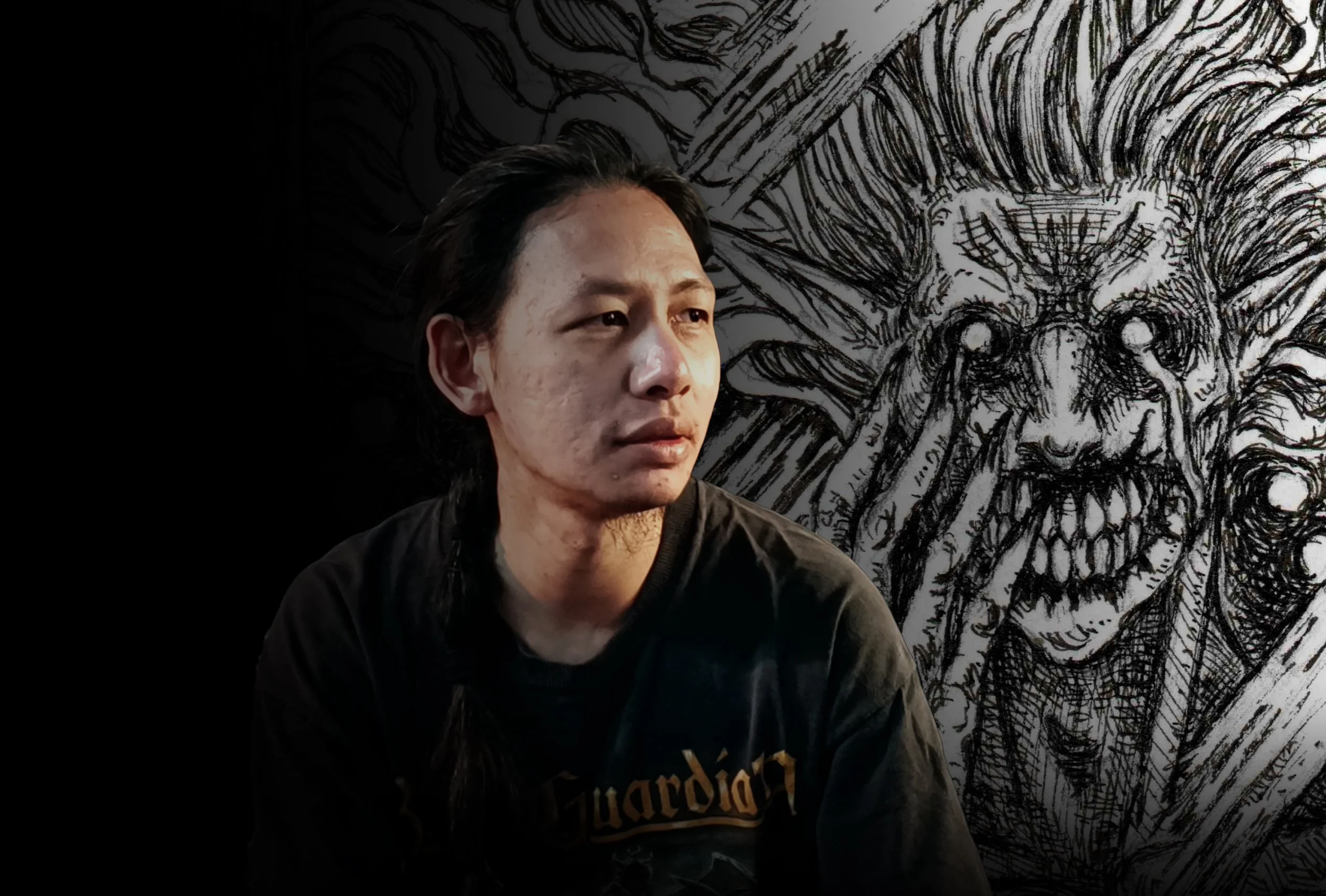
The featured artist for January and the 63rd edition of bkk UNZINE art magazine is Thai artist Tae, also known as Bigeggs Black Pen, whose drawings are inspired by cosmic horror and dark fantasy. His suggestion of this month’s theme, “Gothic,” is a perfect reflection of his unique artwork and we had the pleasure of chatting with him about his journey as an artist as well as his thoughts on the art scene in Thailand.
Have you always been drawn to art from an early age or was it something you came to later in life? What were the things you enjoyed drawing in the beginning?
I think I’ve been drawing ever since I was a young child. To tell you the truth, back then I just wanted to draw, there wasn’t much passion in it until I grew up.
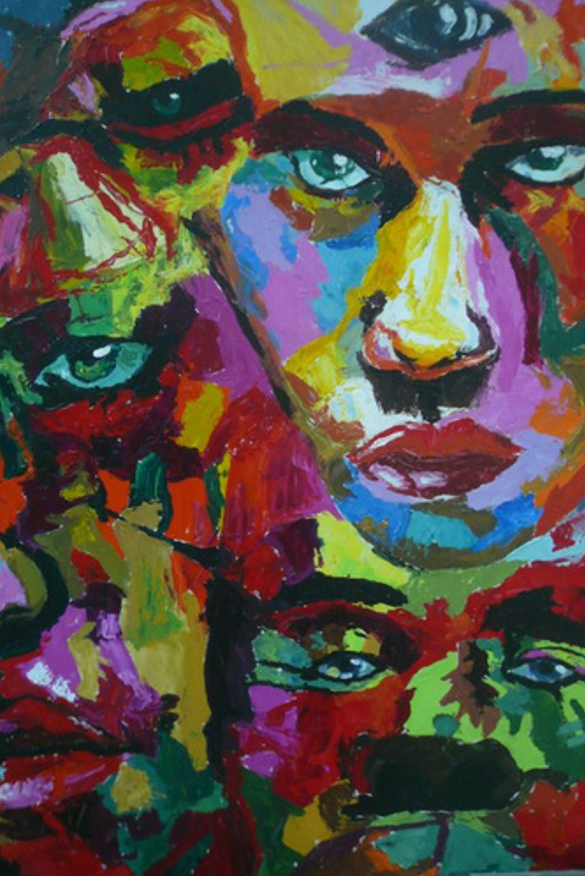
A painting from 4th year in university,
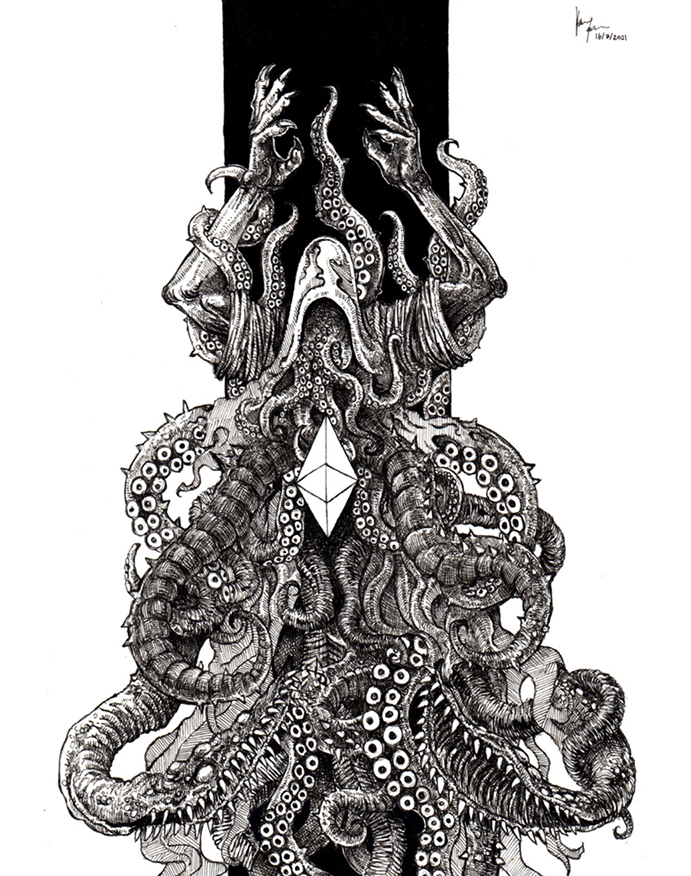
Tae’s first drawing from when he started doing NFTs.
Did you always have an interest in art? What things did you gravitate towards (such as hobbies, activities, entertainment, etc,) while growing up? Did you read any comics or follow any cartoons?
Like a lot of boys my age, I grew up with Cartoon Network and read a lot of manga in high school. I only became interested in American comics after I become adult and graduated from university. But before I started my master’s degree, art in general never really interested me that much.
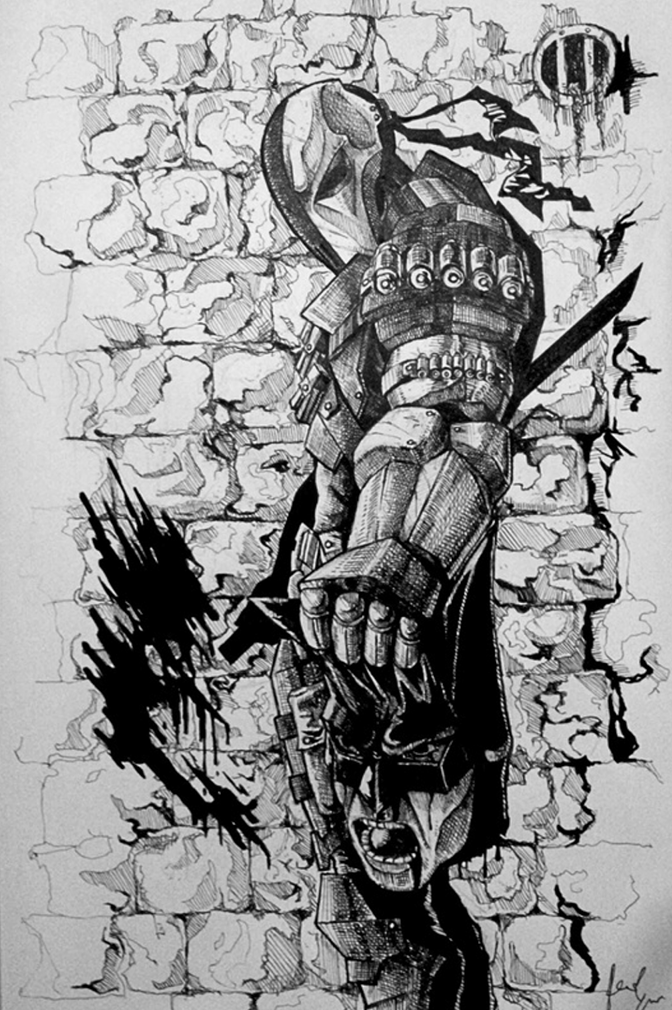
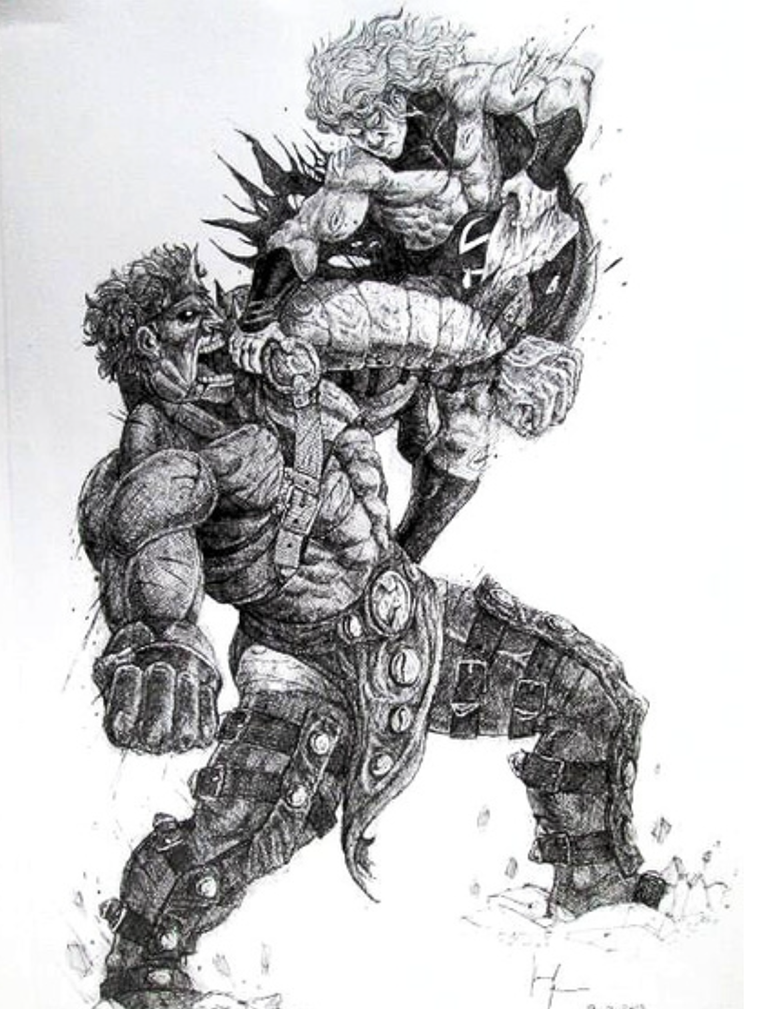
Early drawings of Marvel and DC Comics characters.
As a freelance artist in Thailand, how do you view the art scene and life as a professional artist here?
If a younger person who loves drawing and wants to become an artist ever asks me about this, I always give the same answer: get a full-time job first, lol. Then use the money from that job to support your passion for drawing. Life as a freelance artist is extremely tough. Being able to live 100% off your work as an independent artist is very difficult— it depends on many factors. It’s not just about being good at drawing and automatically succeeding.
What’s your opinion on current Thai art and its place in Thai culture in modern times?
I think a lot of Thai artists today are more confident about putting themselves at the center of their work. Young people and the general public are also getting more into art— you can really see it in how galleries are becoming places people actually want to visit. Galleries themselves are adjusting to new trends to attract visitors, even if some of those trends feel a bit superficial.
Tell us a little about your process… Where do you find inspiration and how do you develop your work from concept to finished piece?
Most of my work starts from what I personally feel like doing. I usually begin by imagining what I want the next piece to be—its theme and overall vibe. If it’s a Lovecraftian piece, I first decide which story or idea I want to bring out. Once I have a rough image in my head, I look for references and start sketching. That initial sketch doesn’t completely lock the final result, though— my work almost always changes along the way. I’m constantly adjusting things, simplifying parts, or adding new ideas as I go.
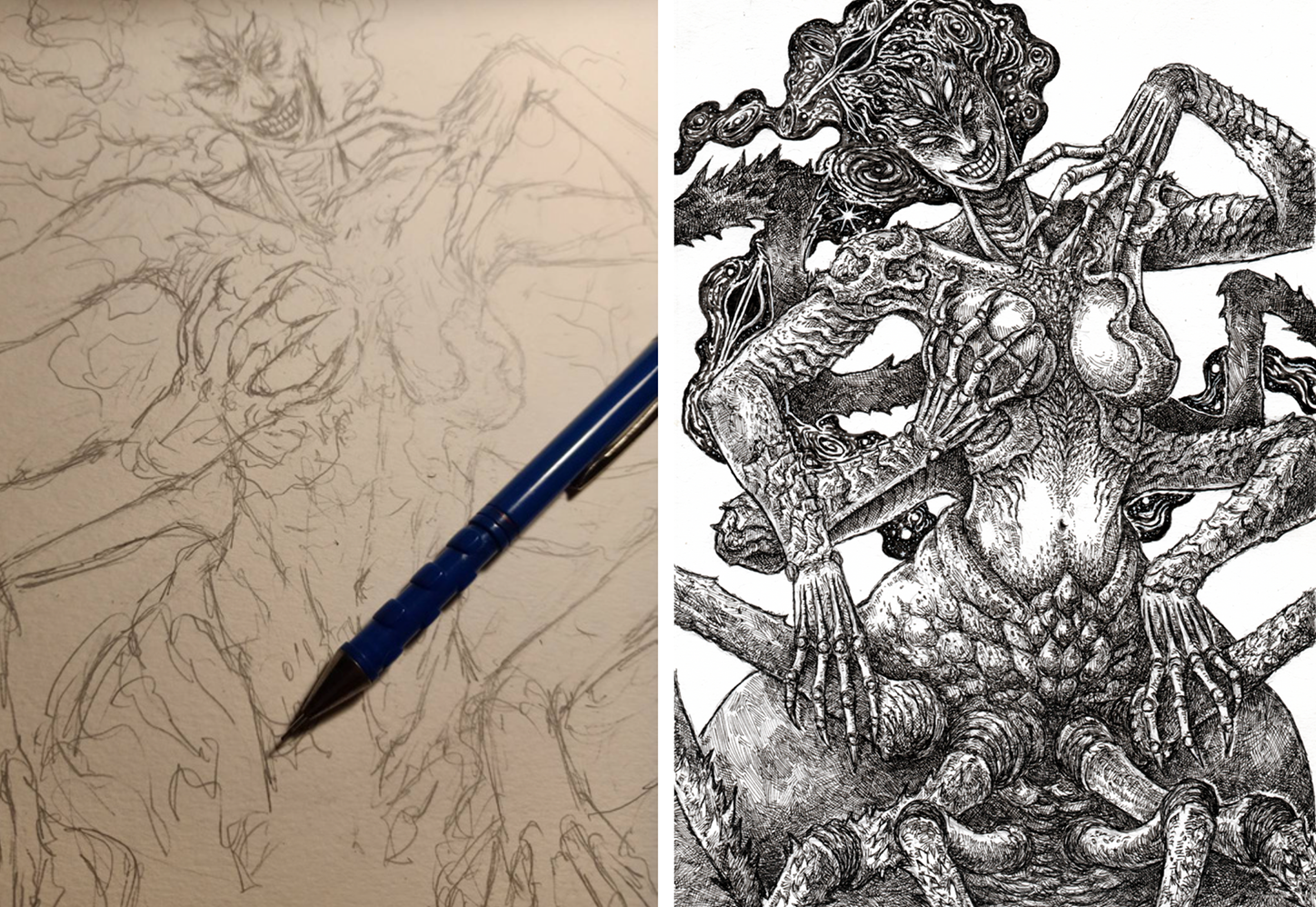
Rough pencils and final inks for “Atlach-Nacha,” a character from a Lovecraftian story called The Seven Geases by Clark Ashton Smith.
You’d said you formally studied Fine Art at King Mongkut’s Institute of Technology Ladkrabang (KMITL)… How was your experience as an art student and can you compare and contrast what you imagined as an art career back then as opposed to the actual career path you’ve had?
Back in high school, I was the kind of kid who had no idea what I wanted to study or what I wanted to do in the future. During school breaks, I had a lot of free time and nothing productive to do, so my mom sent me to an art tutoring school. What started out as just a way to kill time turned into me seriously studying drawing for about three years.
At that point, the only reason I chose to study fine art at KMITL was because it felt like my only option. That experience completely changed the way I saw art— but it still wasn’t enough for me to choose an art career right after graduating, since my family already had a business for me to do.
I wasn’t creating any art until a few years had passed.
How did you get into NFTs and did you learn anything notable from working in that field?
Before COVID really hit, a part-time lecturer who’s also a friend of mine (he now teaches at KMITL) talked to me about joining an NFT project. At that time, the NFT market was completely flooded with profile-picture–style work, like CryptoPunks and Bored Apes. He had seen my pen drawings on social media and felt that this kind of pen-on-paper work was still pretty rare in the NFT space back then.
That’s why it felt like a good opportunity for me to try putting my work into the crypto world. At first, nothing sold at all. But I kept producing work consistently and adjusted my pricing and presentation as things changed.
The “Tentacle Horrors” NFT collection on Opensea.
When COVID hit hard and the whole “work from home” situation started, my NFT collection began to gain some traction and eventually did pretty well. Working nonstop during the COVID period became a major turning point for me— it’s what really helped me carve out my own path as a pen-drawing artist.
“I find the Gothic style very compelling. It’s a theme that allows you to explore darkness and dark fantasy in many different ways, while still being able to express raw brutality or even elegance…”
You came up with this month’s theme for bkk UNZINE art magazine, which is “Gothic.” It certainly very much reflects your work… Can you describe what you want to evoke with the term “Gothic” and the beauty you find in it? How does “Gothic” relate to the world we live in today?
In general, Gothic originally refers to a period in medieval art history, where architecture was closely tied to Christianity. But when we talk about Gothic in art and literature, it feels closer to romanticism— the beauty of death, separation, sorrow, darkness, and moody atmospheres, often set in old, decaying environments. All of these elements appear in a certain phase of H.P. Lovecraft’s writing.
Personally, I find the Gothic style very compelling. It’s a theme that allows you to explore darkness and dark fantasy in many different ways, while still being able to express raw brutality or even elegance in a seamless and beautiful way. Through my work, I want people to become more familiar with H.P. Lovecraft through a Gothic lens.
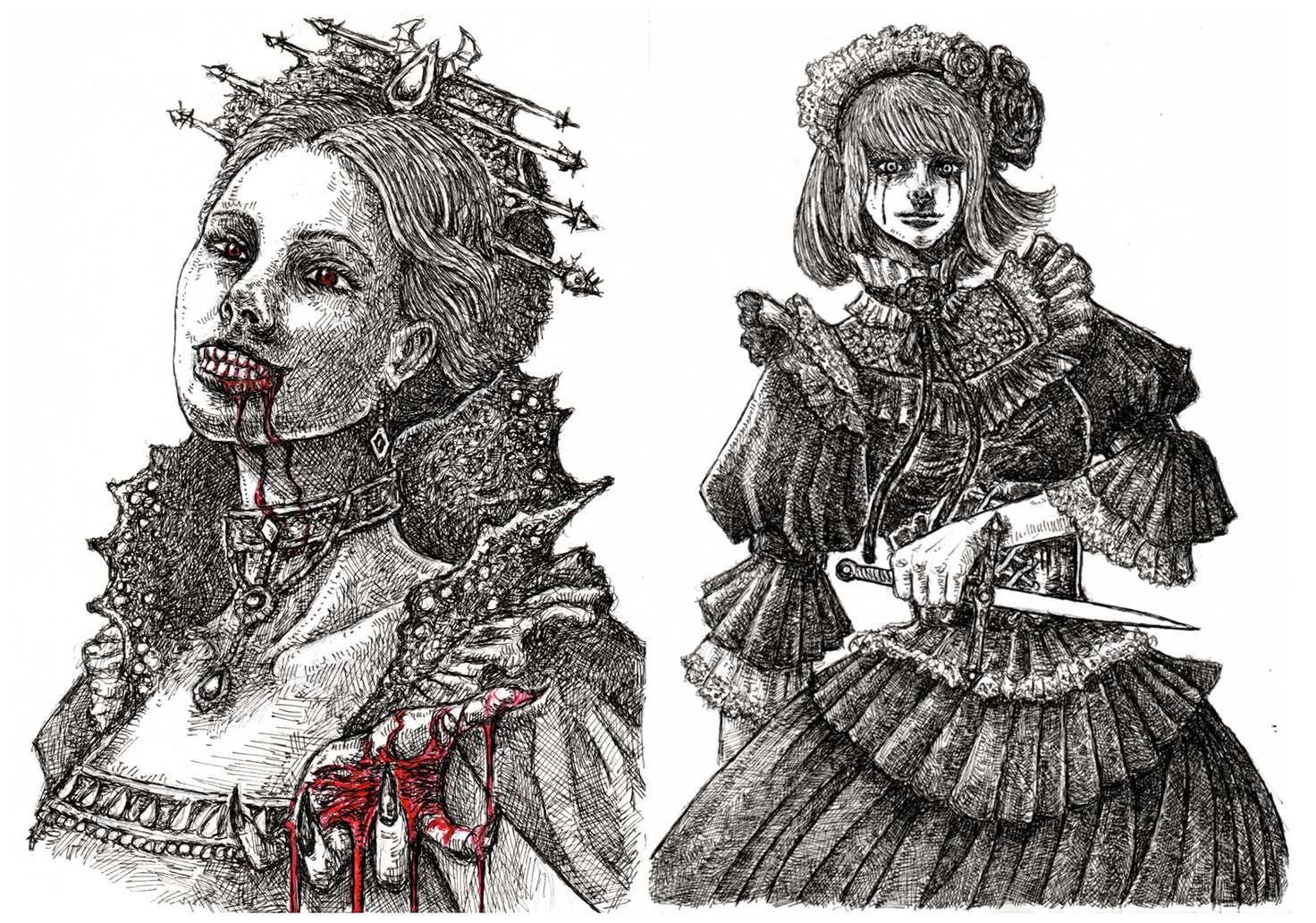
Recent art representing the idea of a gothic theme: Elizabeth Bathory and a girl in a gothic Lolita dress.
Your featured piece for this issue, entitled “The Ghoul That Grieves,” touches upon identity, isolation and the desire for interaction… Are you active socially in the art scene or mostly keep to yourself as a creator?
“The Ghoul That Grieves” drawing was inspired by “The Outsider,” one of my favorite Gothic stories by H.P. Lovecraft. But it doesn’t really reflect my personality or anything, lol. I’m actually pretty active on social media, and I try to attend art market events as much as possible—since they’re a good source of income for freelance artists, and a great way to gain more admirers and followers.
How did you discover H.P. Lovecraft? Had you been aware of his work growing up?
I didn’t really know H.P. Lovecraft seriously until I started drawing NFTs in a tentacle-horror theme. Most of my references at the time came from foreign artists who mainly illustrated Lovecraft’s work. After spending some time creating Lovecraftian pieces for my NFT collection, I was contacted for a book cover commission by a publisher who was about to release the Thai edition of The Call of Cthulhu. That moment became a major turning point in my life— it’s when I started being recognized as a Lovecraftian artist and truly found my own path.
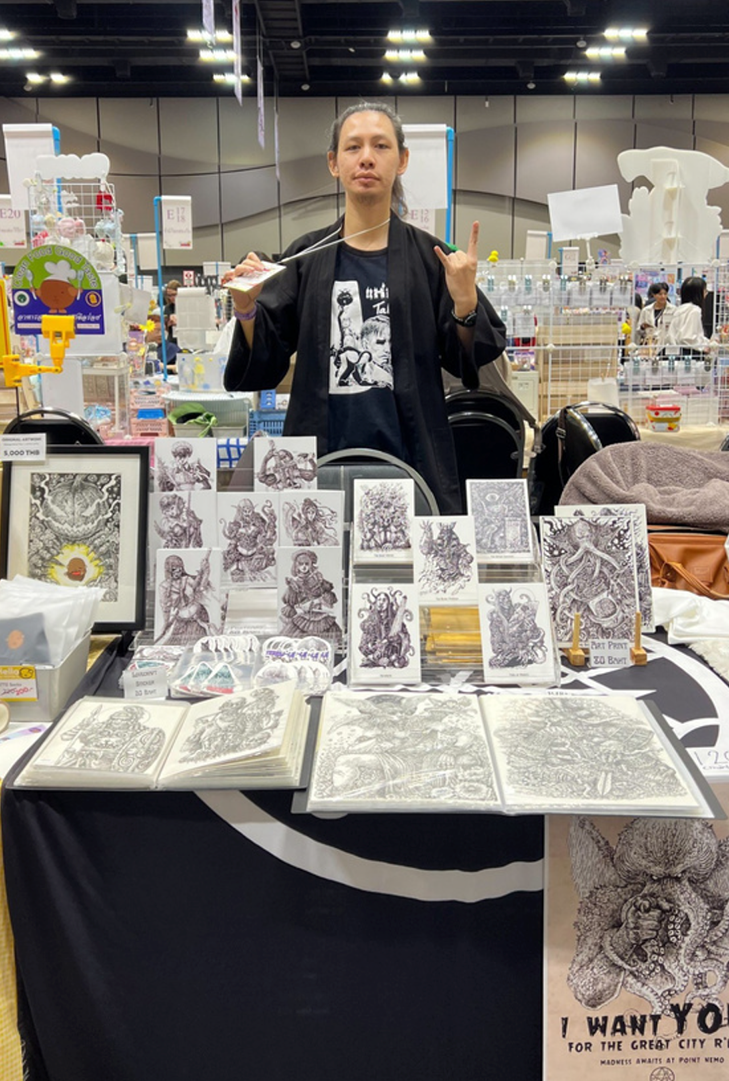
Bigeggs Black Pen’s booth at Comic Avenue 10.
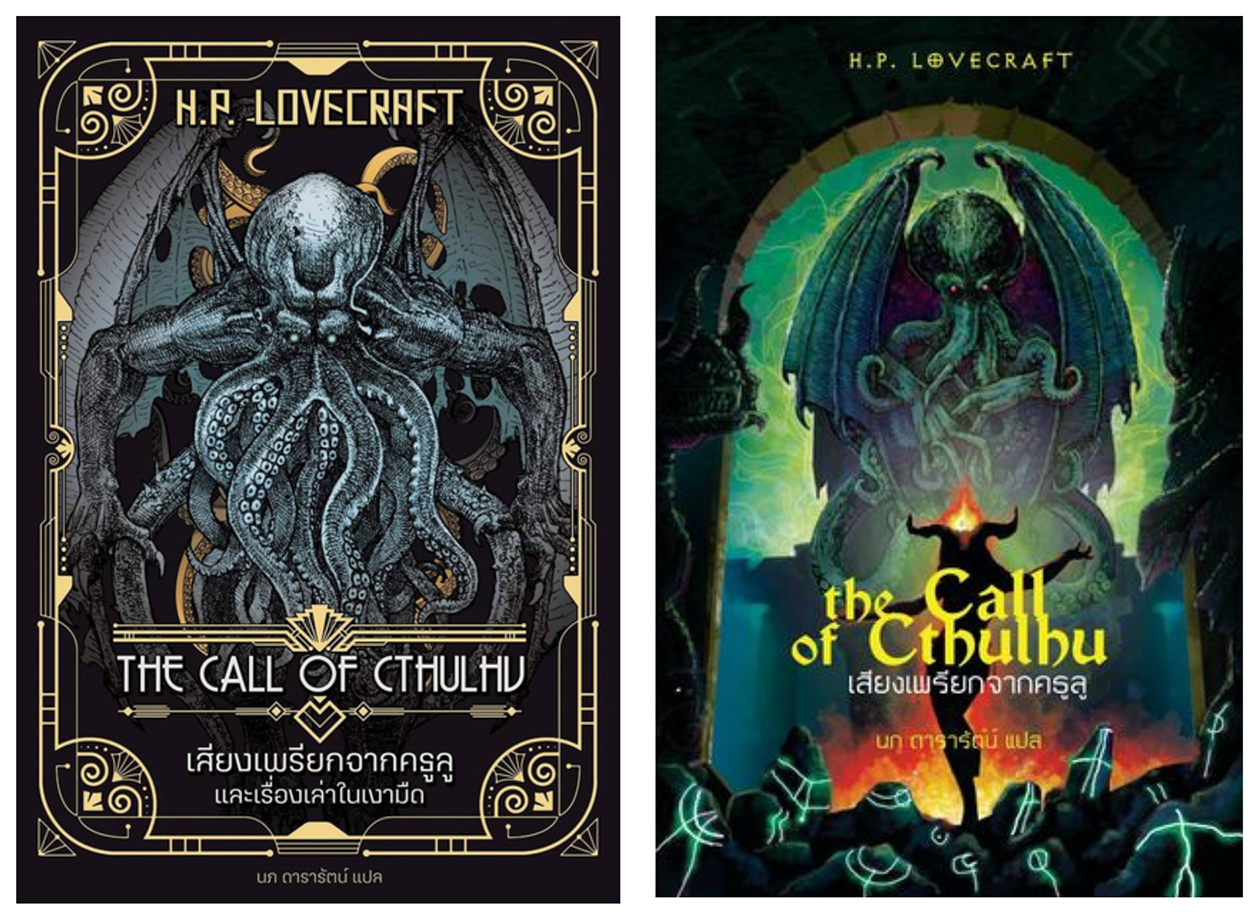
Book covers for The Call of Cthulhu from Time Publishing.
Horror as a genre certainly addresses human perception of the world around us… What are your thoughts on how Lovecraft reflects our world, both historically and presently?
Honestly, H.P. Lovecraft’s work— and Lovecraftian stories in general— aren’t strictly horror. Their roots are really in weird fiction, something you don’t need to take too seriously. It’s kind of like pulp fiction: you read it for fun and move on, without having to dig too deeply into complex meanings. But over time, many writers have reinterpreted his work and added new ideas, expanding the Lovecraft universe into something much bigger than it originally was. Today, Lovecraftian themes show up in almost every kind of media— games, animation, films— which really shows how it’s evolved from simple weird fiction into stories that genuinely reflect modern ideas and social contexts.
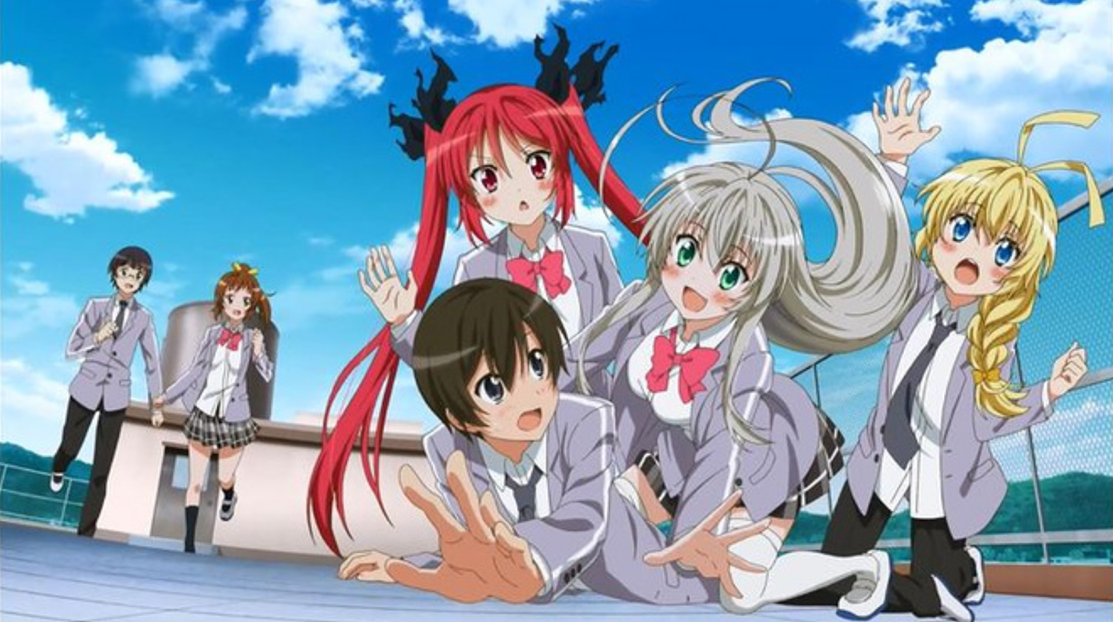
“Nyaruko: Crawling with Love” is one of the most iconic and famous Lovecraftian adaptations.
Do you think there are any common misconceptions about Lovecraft’s work? I’m not sure how familiar the Thai population is with Lovecraft… How do you wish Thais would be introduced to this work you’ve come to admire so much?
Like I mentioned earlier, H.P. Lovecraft’s writing isn’t really horror in the way most people think. It’s more about strangeness, the uncanny, and fear of the unknown—things humans can’t fully comprehend or process, which ultimately can lead to madness.
Here in Thailand, Lovecraft’s work is becoming much more recognized than before. There are more Thai translations of his novels, and many new Thai writers are creating their own Lovecraftian-style stories. And even more art about his work. Personally, that’s all I really want to see happen— more people exploring and appreciating his world.
And how have audiences reacted to your work? Have you ever dealt with misconceptions from people as well? What do you want people to take away from your art?
Personally, after spending some time in the art world, I’ve realized that the Lovecraftian universe isn’t fixed— every artist presents it in their own way. I’ve seen artists depict Lovecraftian characters in all sorts of styles, from anime to metal album covers and more. Conceptually, Lovecraft’s work can’t really be represented in a fully concrete way, because the human mind can never truly comprehend the nature of Lovecraftian gods. But that’s exactly what keeps H. P. Lovecraft’s vision alive today, even though he’s long gone. As for my own Lovecraftian art, I want people who see my work to feel its rawness and directness. I try to represent H.P. Lovecraft’s characters as faithfully as possible to how they’re described in his books.
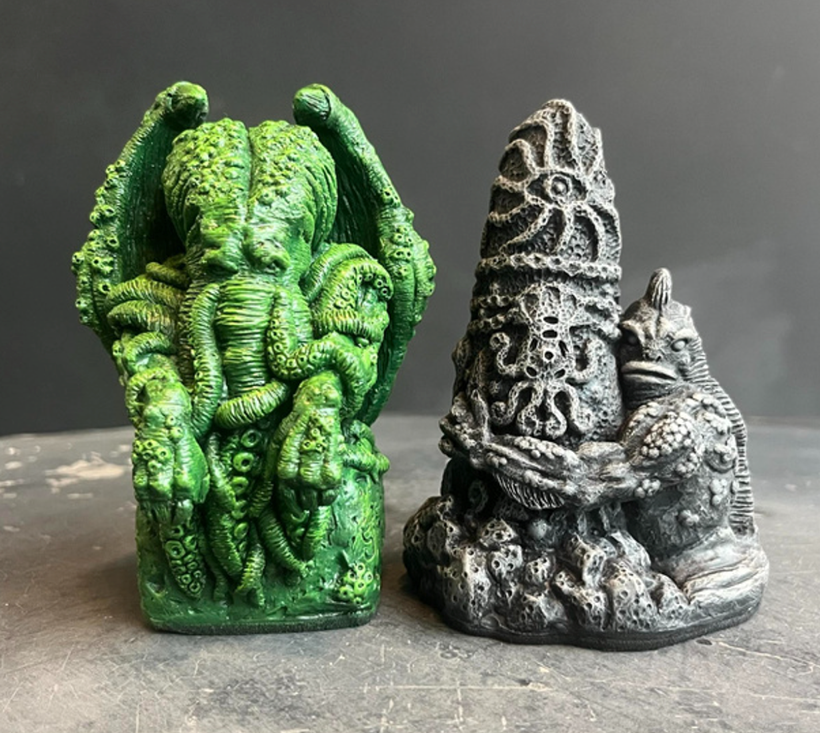
True to source material Cthulhu and Dagon sculptures designed by Tae.
In the video interview you mentioned you are exploring color… Are there some benefits and lessons you’ve learned that are unique to working with color as opposed to black and white? Do you have any other pursuits lined up to further push your limits? Other genres or media?
I have a friend who’s really knowledgeable about H.P. Lovecraft, and I’ve talked to him about presenting my new work. He mentioned that most Lovecraftian art tends to be dark and scary, which sometimes doesn’t really capture the weird fiction essence that’s at the core of Lovecraft’s writing.
That got me experimenting with brighter colors in my own work, using references from the Impressionist era— Monet and Van Gogh, mainly. Personally, I’m pretty happy with how it turned out. Seeing Lovecraft’s monsters in a bright, beautiful style actually brings out the weirdness in a way that still reflects the spirit of his work.
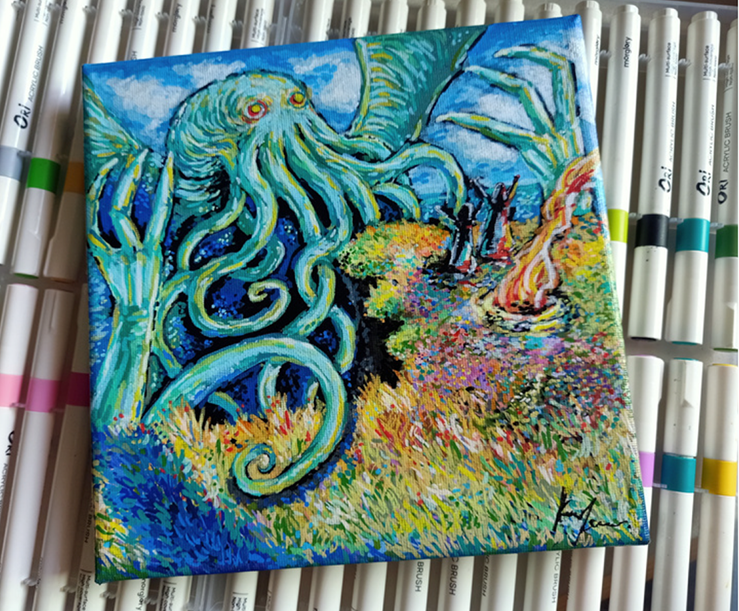
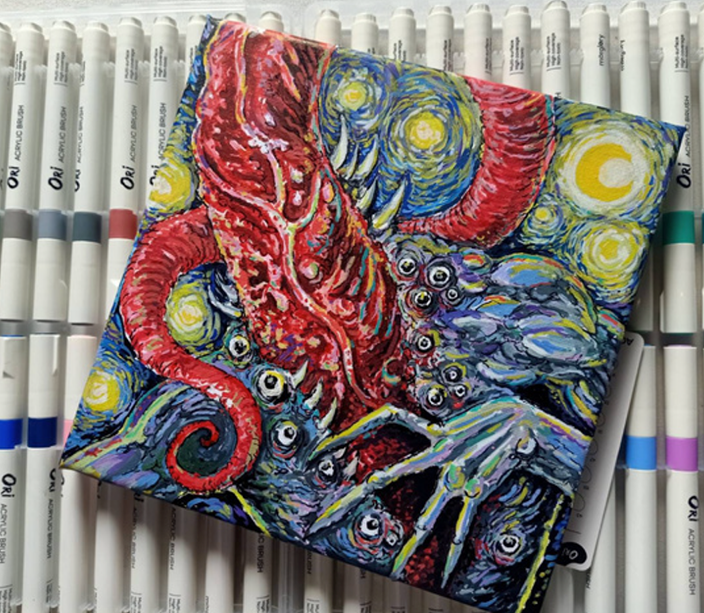
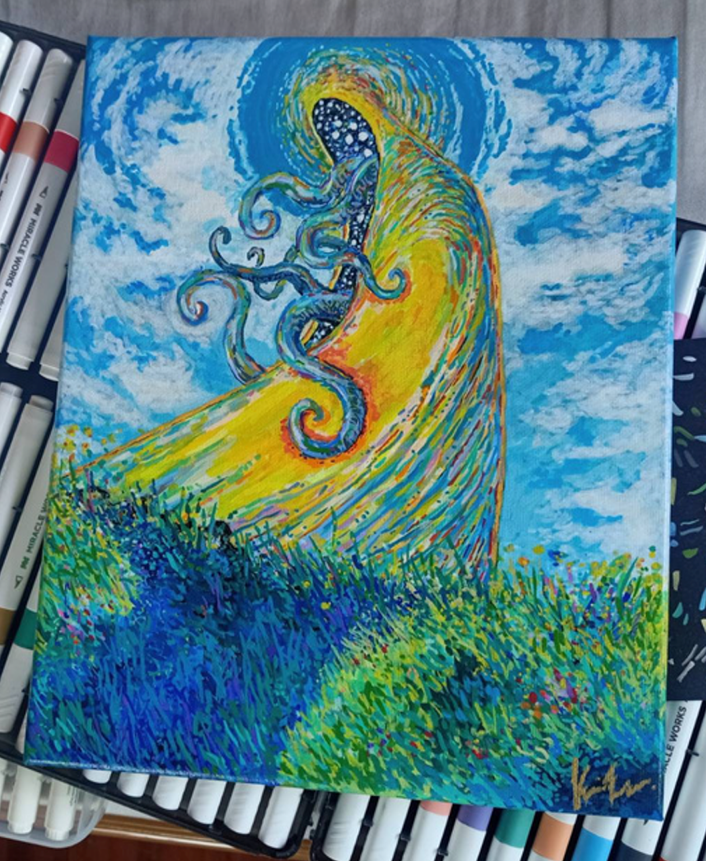
Tae calls this the “Impressionism Horror” collection, done with acrylic marker on canvas and representing the weirdness of the Impressionism era.
For more information on Bigeggs Black Pen, visit his profile here for a brief biography and his social media links.
His entry for the Gothic theme, “The Ghoul That Grieves,” can be seen in Issue 63 of bkk UNZINE and don’t miss his video interview with our own Sketchman Boris on our YouTube channel at the link below!
Special thanks to Bigeggs Black Pen for making this interview possible, and keep an eye out for future collaborations with our featured artists!
