

INTERVIEW:

In 2026, bkk UNZINE is working with our featured artists to develop the themes for each month’s issue.
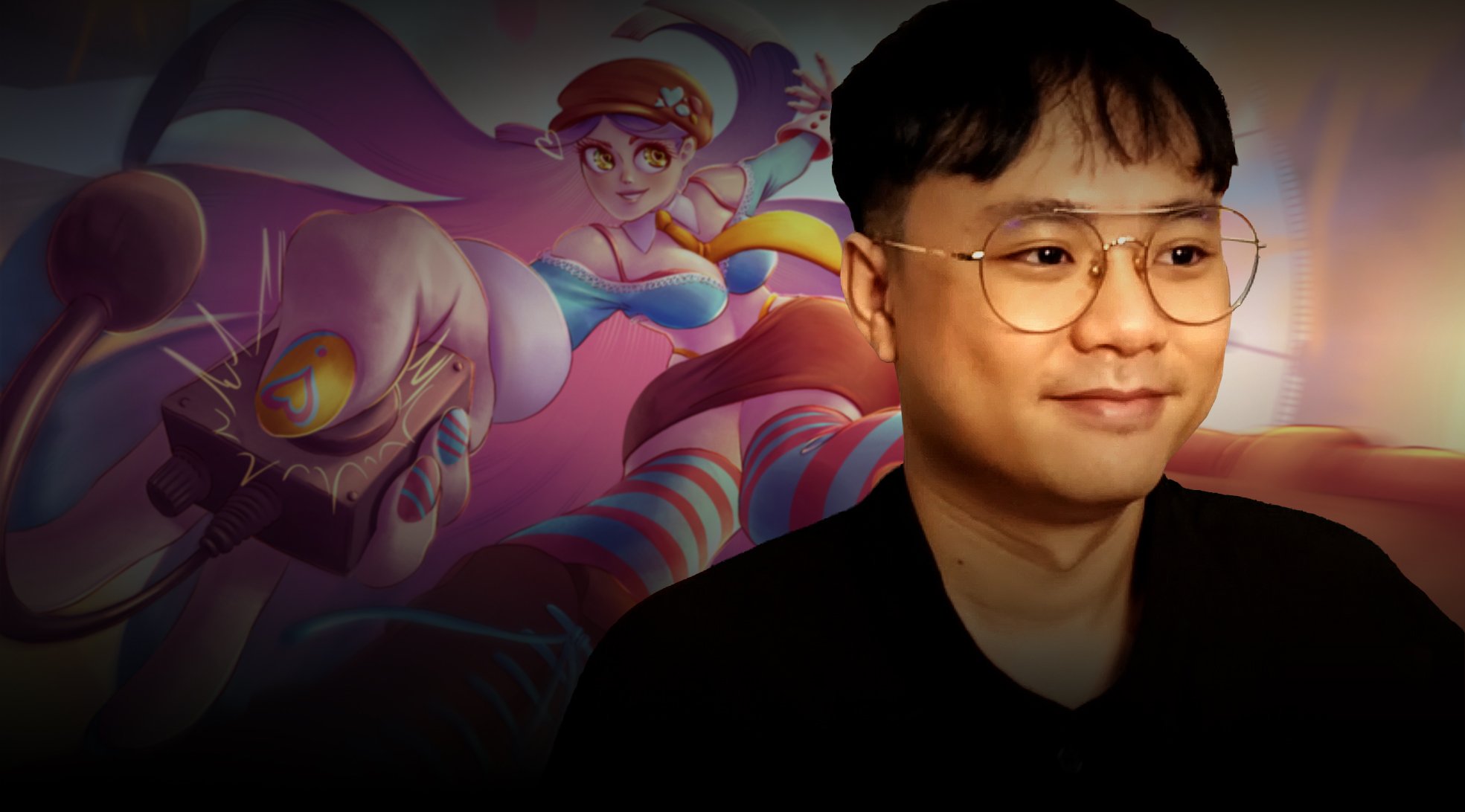
May’s featured artist is Nattanan Kavalee, AKA Top, AKA ImAimDoodles, a gifted Thai illustrator and comic creator who should be familiar to longtime readers of bkk UNZINE. Top’s beautifully meticulous artwork never fails to impress and we were delighted to work with him in crafting issue 67 and discuss his background, process and journey as a freelance artist. Don’t forget to check out Top’s video interview with Sketchman Boris here, as well as his and other artists’ submissions for his suggested theme “Toxic” in the May 2026 issue of bkk UNZINE here.
Hello, Top… thanks for being our featured artist this month. Can you tell our readers a little about yourself and your work?
Okay, I’m just an ordinary guy who loves to draw and is trying to make a living from it. I’ve become a freelancer, helping people visualize their ideas through illustrations, logos, and mascots. Actually, I realized that I simply want to have fun and make money from the things I genuinely enjoy doing.
What was the inspiration for this month’s theme, “Toxic”?
To be honest, I just wanted to draw something fun like “love bombing” and visualize toxic relationships in an exaggerated way. I literally meant a real bomb at first. But “Toxic” felt easier for people to interpret and enjoy as a theme, right?
And your submission for the theme, “Toxic: Love Bombing,” is a very expressive piece. Was it fun to draw and what’s the message you want to convey?
Beneath the colorful disaster, the message is a question about relationships, how love can become toxic. “Love bombing” isn’t really love; it’s more like a transaction that benefits the person who holds power in the relationship. Love can be broken down and rebuilt to trap someone in a relationship that only satisfies one side, almost like destroying something just to rebuild it on your own terms.
Growing up in Thailand, was it always your intention to be an artist or did you have your sights set on other career paths before?
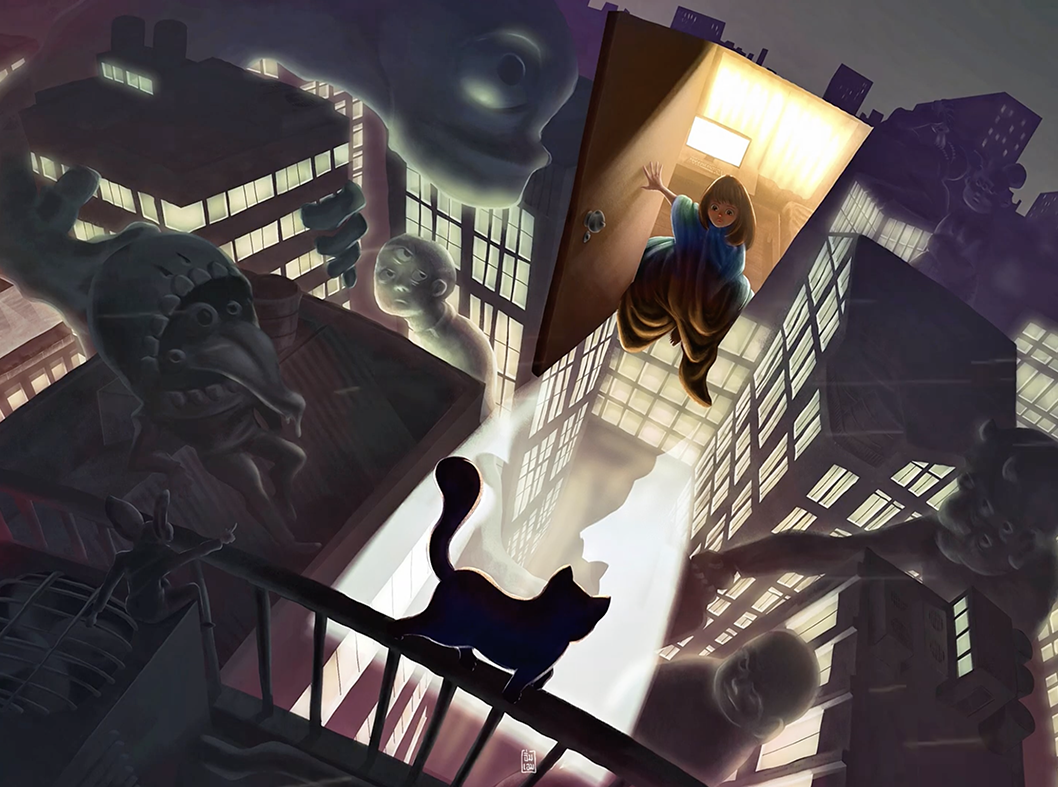
I’ve always wanted to be a comic artist. But when I was younger, I thought it was impossible. Every time I told my family about my dream, they would push back with questions like, “How will you live?” or “How are you going to afford your life?” They genuinely believed I would starve. So I tried to find something in between, something I liked, but that could also support me financially. I made a big mistake by choosing to study architecture. It felt like a living hell. After graduating, I tried switching paths and worked as a 3D modeler. Then I aimed for higher-paying jobs, like becoming a programmer, focusing on front-end development but I couldn’t find a job. I ended up going back to architecture, and those four months really messed me up. I was doing something I hated, living a life that wasn’t mine. That’s when I decided to be honest with myself— to stop wasting time and finally do what I truly want to do. So now, I’m working as a freelancer.
Have you always drawn since you were young? What kind of art did you gravitate towards?
I’ve loved drawing for as long as I can remember, even when no one really cared. It became a kind of ritual for me, something that helped me hold myself together when things weren’t going well. Ironically, when I was younger, I didn’t like “art” as it was taught in school. I even hated it at times. The way it was taught made me misunderstand what art really is. Many art classes felt more about following instructions than exploring creativity, and I struggled with being forced to create things in a specific way. What really drew me in were things outside of that system like animation, manga, and literature. Those were the forms of art that felt alive to me, and they shaped how I see and create art today.
“Making comics is my dream. I really love sketching scene by scene and designing how to visualize a story from panel to panel, like breadcrumbing pieces of a jigsaw that come together into a message at the end.”
And was there anything in media back then that inspired you? What manga/comics, anime/cartoons, movies, etc. sparked your imagination?
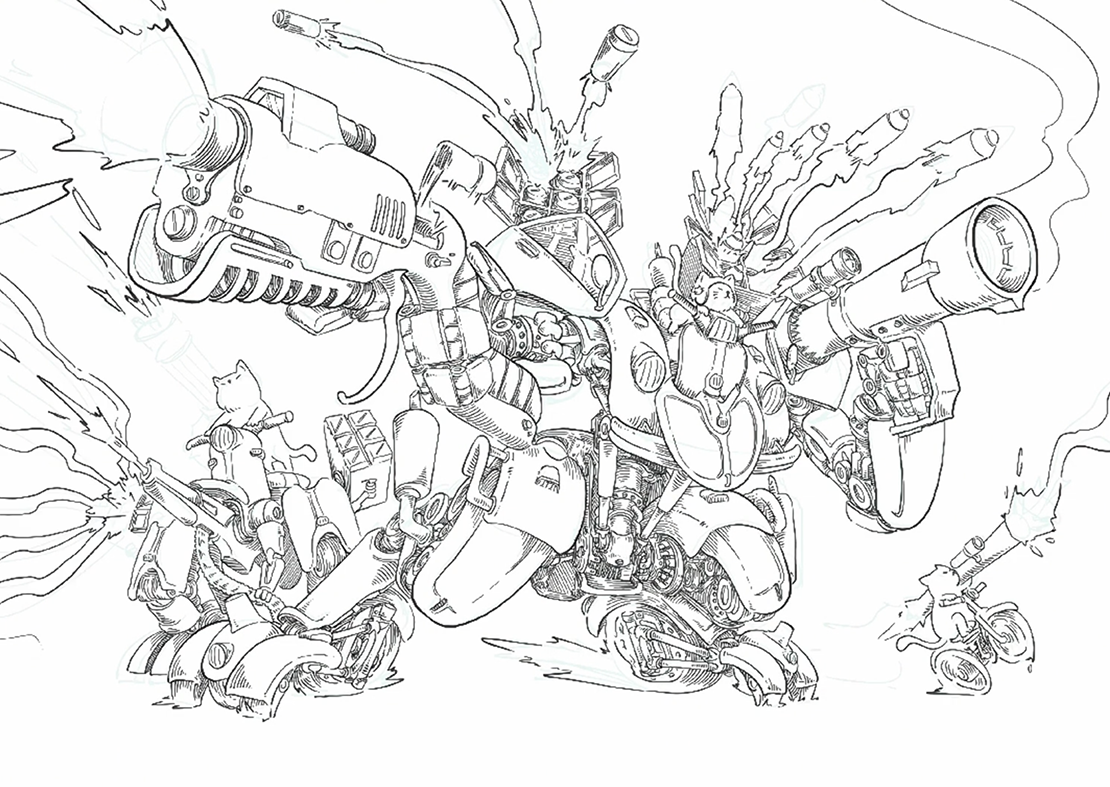
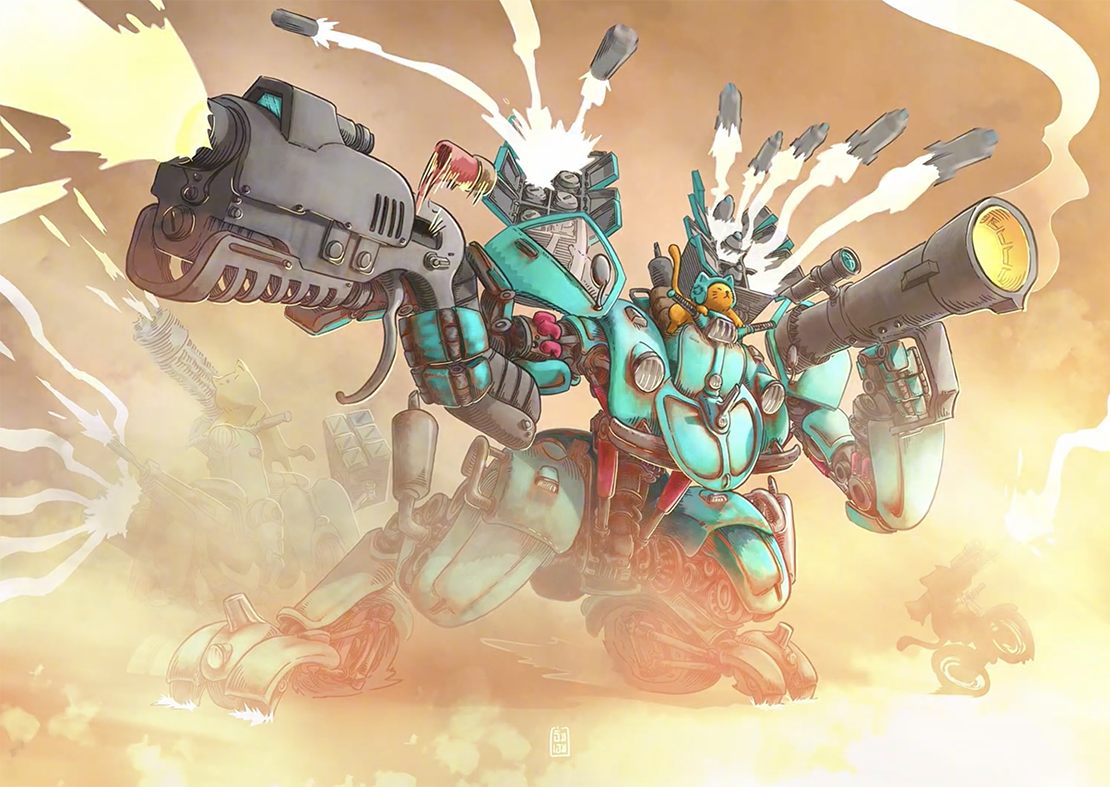
I think most of them were anime and manga. Back then, it wasn’t mainstream media. I didn’t really have anyone to talk to and anime that people usually talked about were One Piece, Naruto, and Bleach, but I never watched those. I only watched things that felt connected to my inner self, like Gundam, Evangelion, and Eureka Seven. Most of them were in the mecha genre, but the way they told stories really inspired me. Maybe I just love robots.
You said you studied architecture and that it was not a path you wanted to follow… Do you still have any inclinations towards architecture and how does your architectural background influence your work today?
I think my background in architecture still influences me to this day, as a trauma. Just kidding. Studying architecture shaped the way I look at things in a more structural way—my sense of space, and the way I approach work at the concept stage. Some of those methods are still useful… and maybe some PTSD too. But honestly, it’s not that useful. I just need to accept that I wasted my time for nothing.
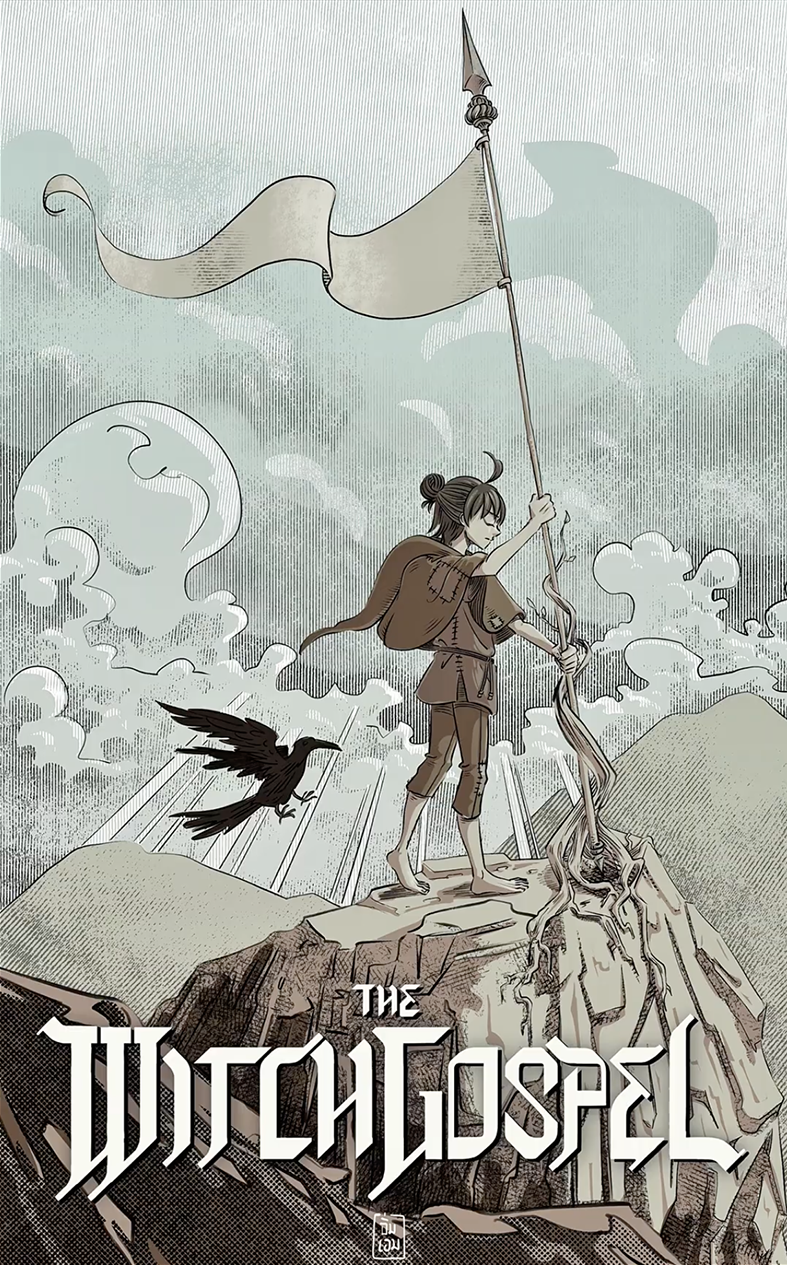
You’ve also published on Webtoons… can you tell us a bit about your comic work?
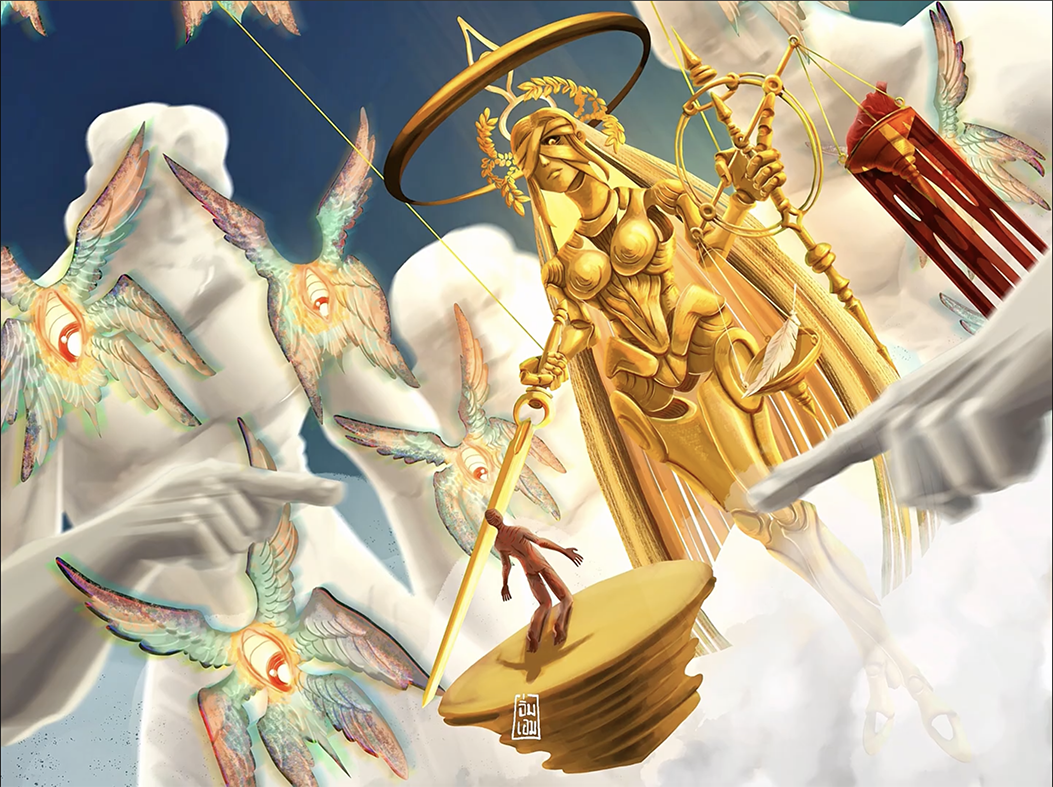
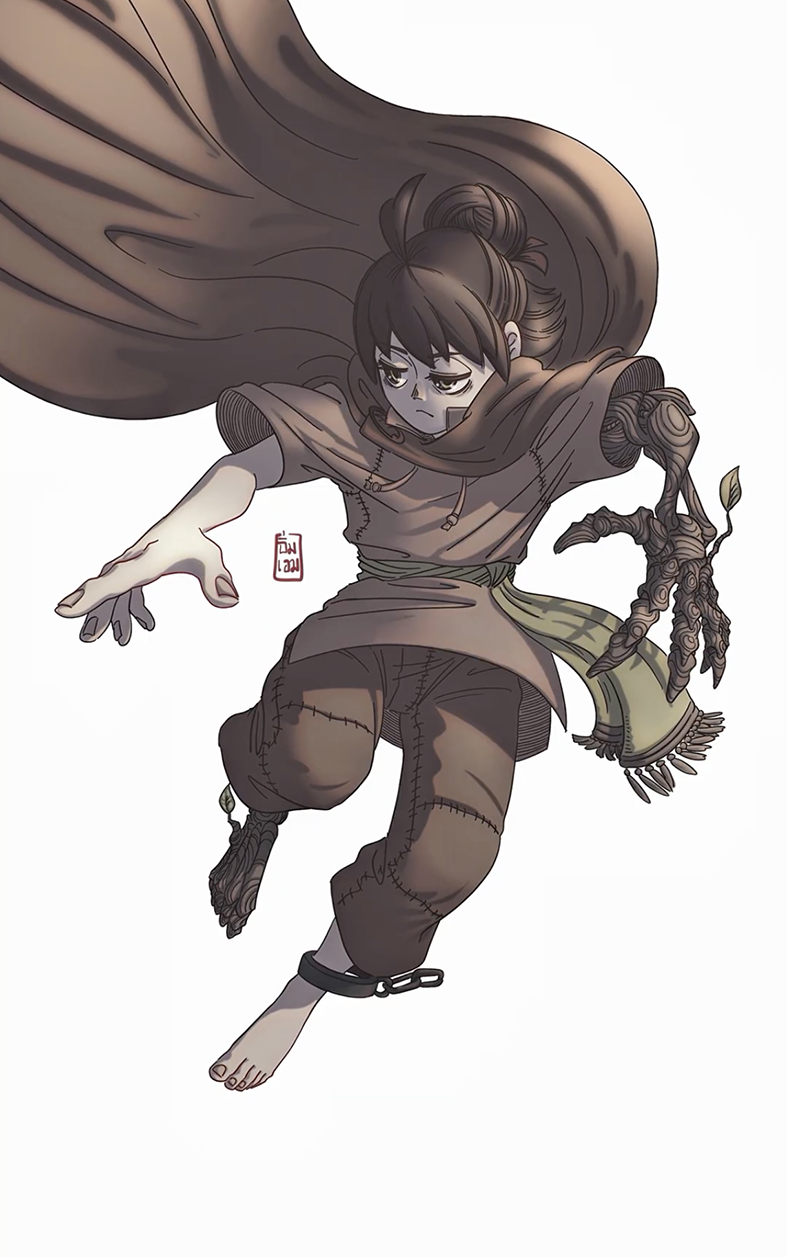
Sure, it’s called The Witch Gospel. There are a lot of elements in this comic like politics, religion, romance, and more. but I think the main concept is “love” itself. I started this project to submit to the LINE Webtoon Contest 2025. The main genre of the contest was romance, and the sub-genre I was interested in was “borderless love,” so this comic is my interpretation of that idea. Unfortunately, I didn’t finish it in time. but I decided to publish it on Canvas anyway.
Are there any manga or comics that stand out to you now? Any artists you find compelling and noteworthy?
“Chainsaw Man” by Tatsuki Fujimoto. It’s absolute cinema. I highly recommend it.
Do you have a preference between narrative storytelling, such as comics, and single self-contained illustrations?
I like them both. Making comics is my dream. I really love sketching scene by scene and designing how to visualize a story from panel to panel, like breadcrumbing pieces of a jigsaw that come together into a message at the end. As for illustration, for me it’s like a single frame in an infinite series. a moment that contains a story within its elements, frozen in time.
Are you mostly working digitally now or do you do some portions of your art by hand? How would you compare the two and what media do you like working with most?
It really hurts for me to throw my artwork away because my home doesn’t have enough space to keep it. So I mostly work digitally now, mainly because of my limited living space. Also, my scanner is broken, and my phone’s camera quality isn’t great, so working digitally is more convenient when I post on social media or deliver work to clients. I still sketch in a notebook. it doesn’t hurt as much if I have to get rid of it, since I can keep the final work digitally. Recently, I’ve been working at a portrait drawing shop, so all my hand-drawn pieces go directly to clients. That means I don’t have to worry about keeping them anymore.
Are there any media you have not yet used that you want to try your hand at?
I’d love to try immersive exhibitions. creating installations and transforming spaces into art. It costs a lot, and I can’t afford it right now, but if I ever get the chance, I’d go all in for sure.
Have you found a good degree of engagement on Webtoons? Do you have any advice for creators looking to publish online?
My Webtoon has around 300 views… but I’m still figuring it out and trying to improve. so honestly, I think I’m the one who should be asking for advice.
What would you say are the challenges to being a freelance artist in Thailand these days and how do you get your work out there to audiences?
I think social media engagement and algorithms are one of the biggest challenges for freelance artists. How can I make money if no one knows me? It’s really hard to sustain my life as a freelancer when I’m not famous and have zero connections.
Which social media platforms do you find the most engagement on?
The platform I get the most engagement on is TikTok. I also post regularly on Instagram Stories. I try to stay active on Facebook and X as well. I’m trying to reach as many platforms as possible to find my audience.
You’d said that you wished local audiences valued art and creativity more… what part of societal upbringing do you think this is a result of? People certainly enjoy popular entertainment but why is there a disconnect from that and appreciation for the artistic endeavors? How do you think this problem can be tackled?
I think it’s largely because of Thailand’s economic situation. People have to focus on survival first, and art is often seen as a luxury, something you can only afford once your basic needs and social status are secure. So, the kind of art that sells tends to be either viral trends like art toys that people feel they need to own to stay within their social circles or lower-priced work that people can afford. Once the price goes beyond around 500 baht, most buyers tend to be foreigners. This pattern reflects a deeper issue with income levels in Thailand. But at the same time, I can’t put all the responsibility on the economy or politics. I also have to improve myself to reach a point where people can’t deny the value of my work.
What products are you offering these days and how can people find your work?
Right now, I’m offering merchandise like stickers and postcards, and I’m planning to create more. like zines and one-shot comics. I also publish my work on a website called ReadAWrite. You can also find me at art events: Comic Avenue at Central WestGate (Booth E-29) on May 31, Comic Mania at Central Ladprao (Booth K-07) on June 13–14, and Comic Creative at Fashion Island on July 11–12.
Are there any genres or projects you have your eye on for the future?
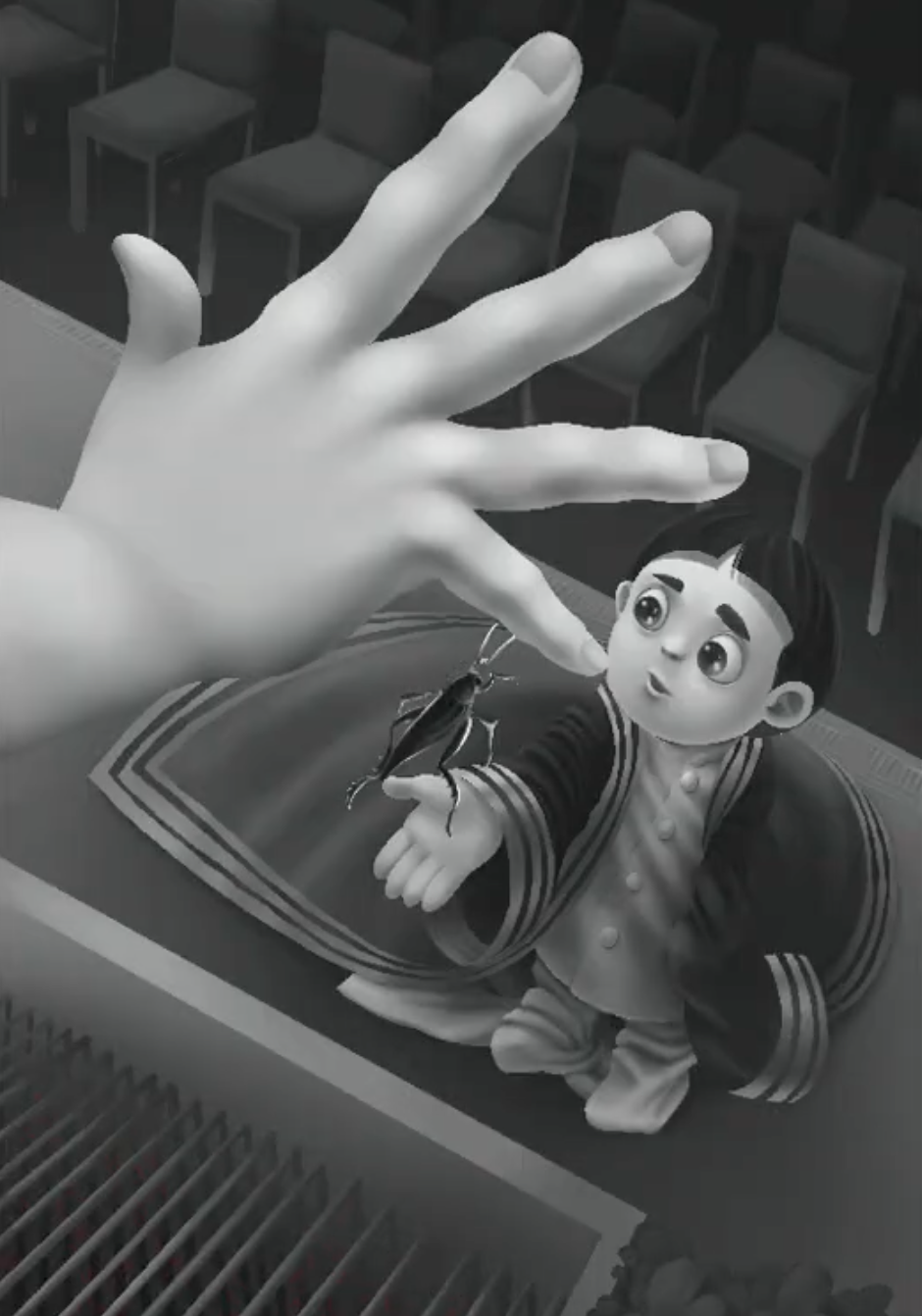
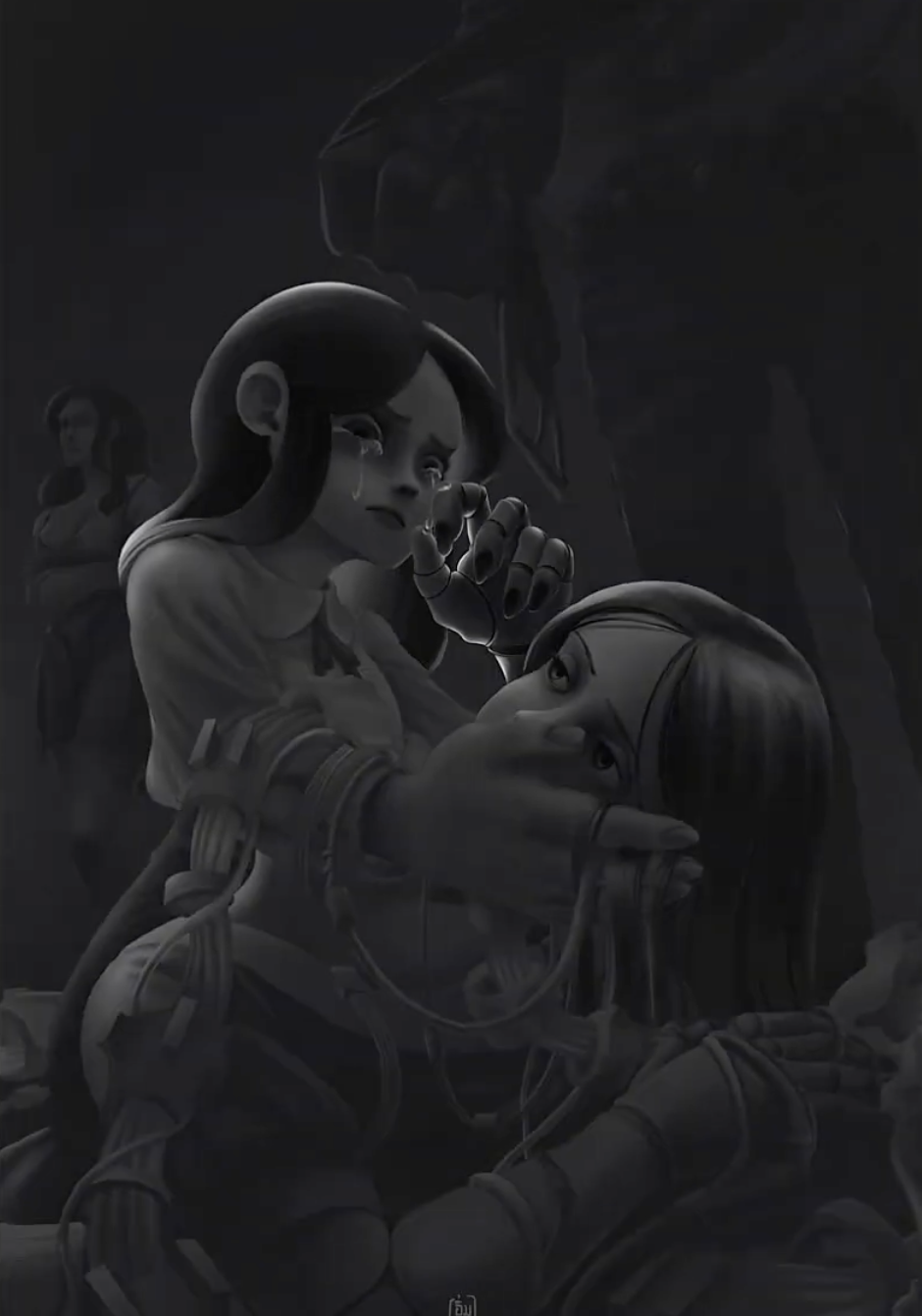
I have so many projects on my roadmap. I want to finish my webcomic The Witch Gospel, and I’m also developing a TTRPG called Roland-B a fantasy tabletop role-playing game designed to be beginner-friendly. My next project will be a sci-fi fantasy mecha comic. I haven’t decided on a name yet, but please give it a warm welcome.
Special thanks to ImAimDoodles for making this interview possible, and keep an eye out for future collaborations with our featured artists!
