


INTERVIEW:

In 2026, bkk UNZINE is working with our featured artists to develop the themes for each month’s issue.
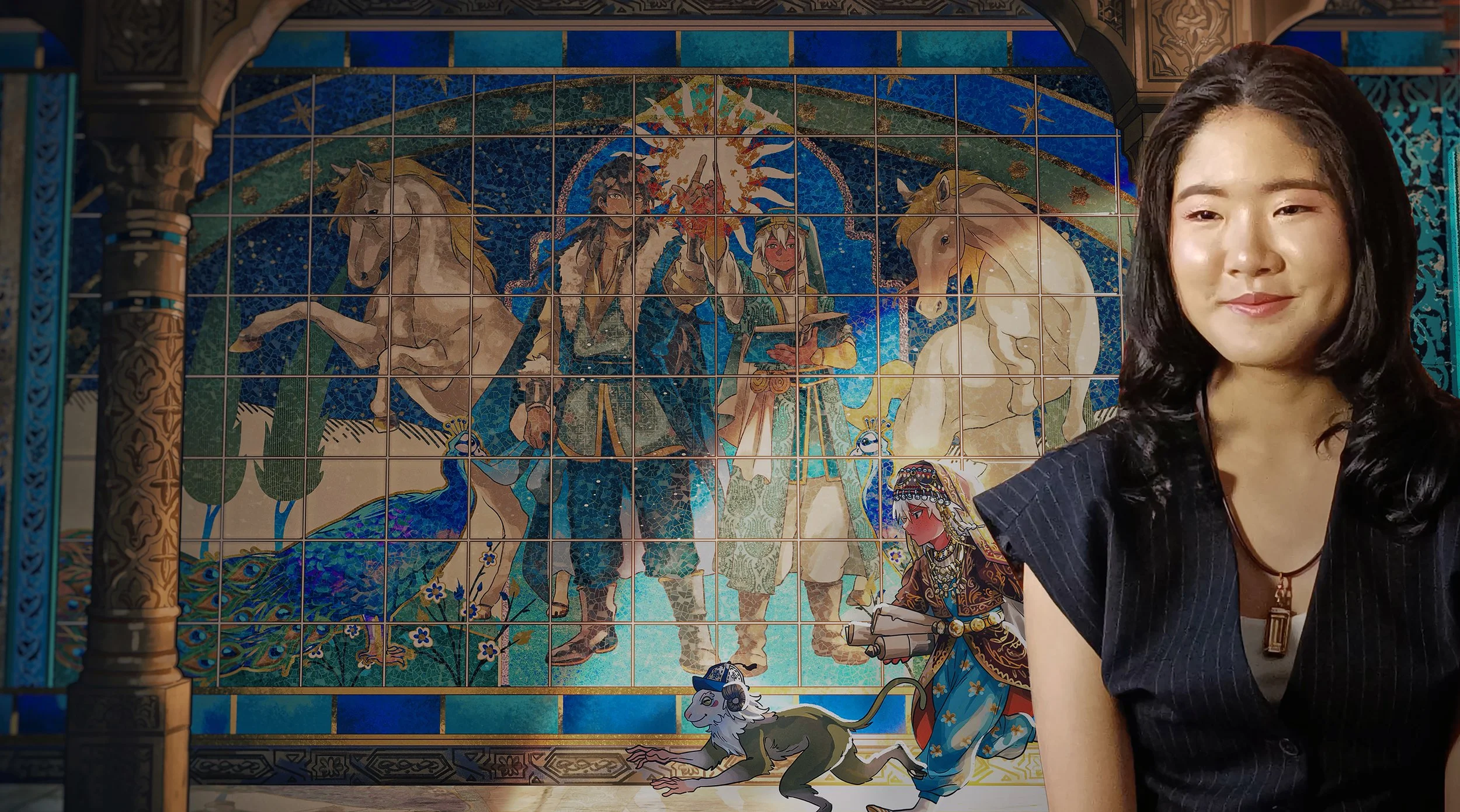
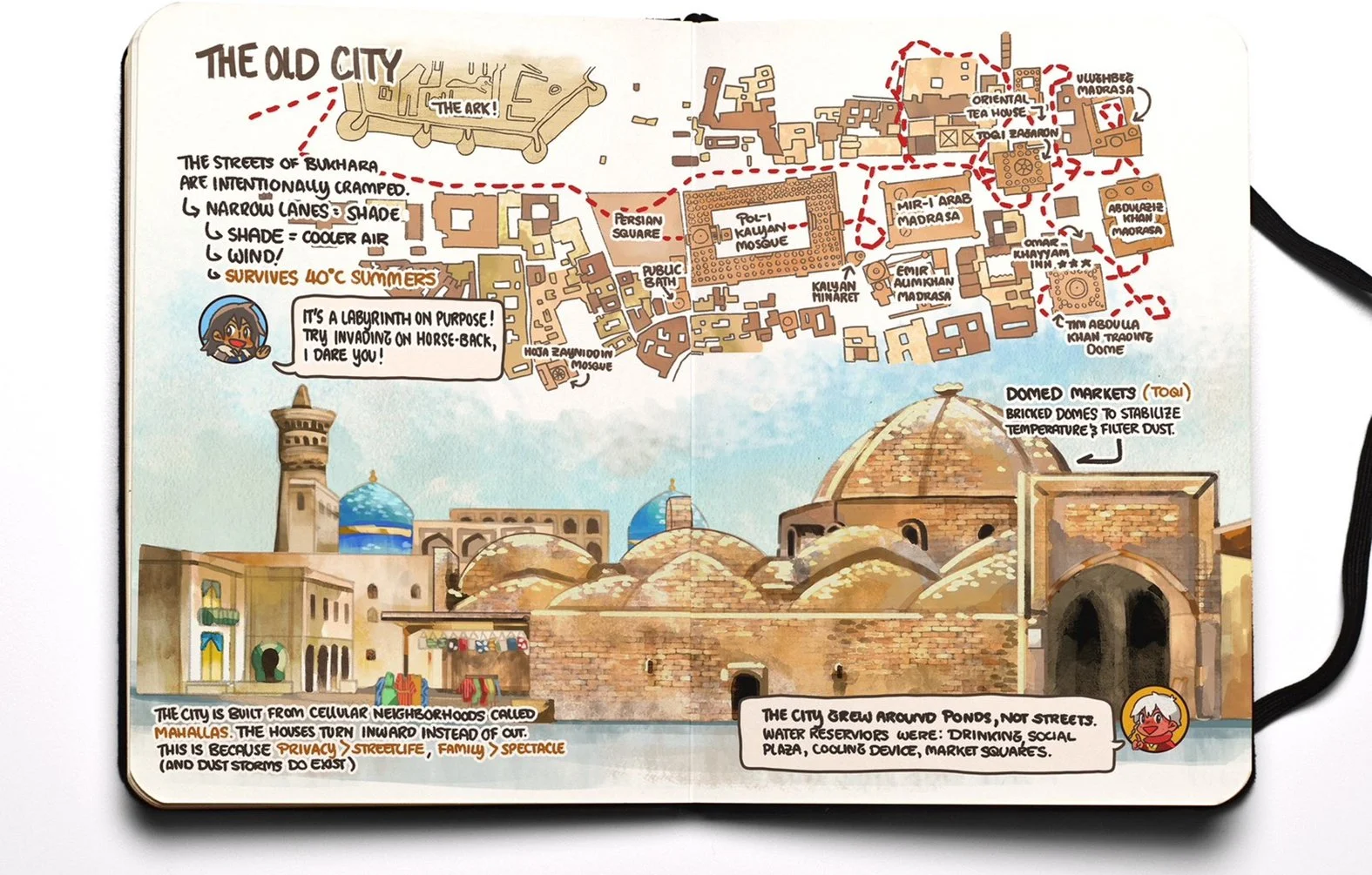
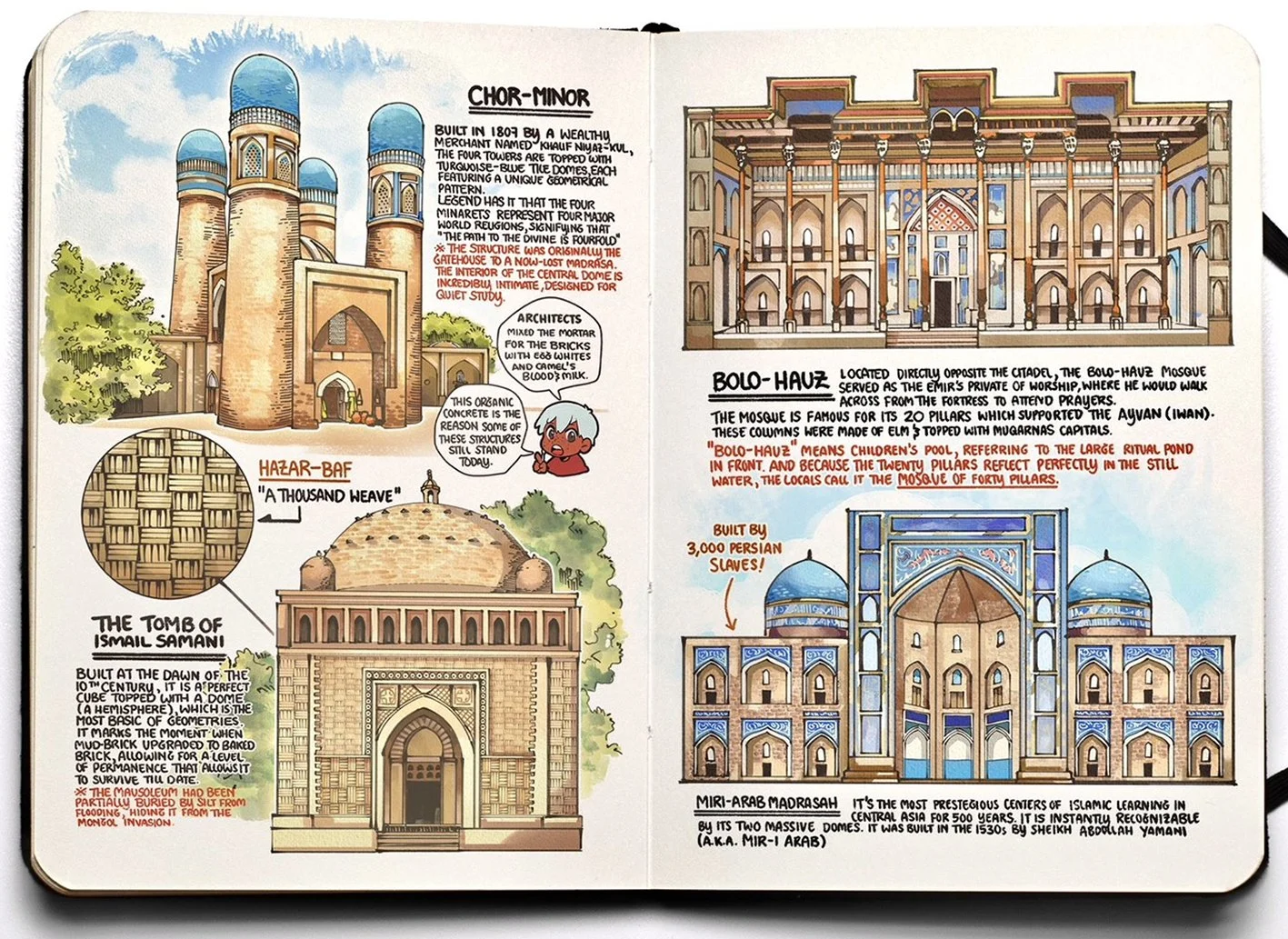
This month, we’re thrilled to collaborate with multitalented Lipika Vethaka, a Thai architect and illustrator with a Master’s in Design from the Harvard Graduate School of Design, where she studied under the Aga Khan Program for Islamic Architecture and minored in History with a focus on medieval Central Asia. Her work centers on Silk Road cities, cultural memory and spatial storytelling and includes Between the Sand and the Sea, a literary and visual narrative project set in a Silk Road–inspired world that explores themes of liminality, memory, and identity at the margins of empire, particularly how cultures, languages, and histories overlap and reshape one another in “in-between” spaces. The work moves between fiction and historical sensibility, drawing from Persianate, Central Asian, and steppe traditions. Lipika is also author of the Sojourn sketchbook series (including Mongolica and Uzbekica), a more observational and architectural body of work. They are collections of travel sketches, spatial studies, and visual notes that document material culture, landscapes and lived environments across regions historically connected by the Silk Road. She is currently working on the Uzbekica edition, which is planned for release toward the end of 2026.
As our featured artist for April 2026 and the 66th edition of bkk UNZINE art magazine, Lipika suggested the theme “Between” and artists’ interpretations of the theme can be seen here.
Thanks so much for talking with us. I remember everyone being so impressed by the artwork you had on display at the BKK Comics Art Festival exhibition last year… You interestingly referred to yourself as a “child of diaspora.” Can you explain a bit about the meaning behind that?
I think that when I describe myself as a “child of diaspora,” I’m talking about something that started long before I was born. My parents were Teochew, and they came to Thailand under difficult circumstances, leaving poverty behind and arriving with nothing at all. So I grew up with this inherent awareness that home was never entirely fixed, but is something that is shaped through memory, adaptation, and resilience (in that particular order).
For a long time, I thought of myself simply as Thai. But at one point, I took a DNA test and was struck that I had no ‘Thai’ genetics at all. Instead, the result reflected a wider continental mix even from places I never thought I’d ever be descended from. It made me realize that identity isn’t something you can reduce to a percentage. Maybe it is something you got to live through and construct, and sometimes, reinterpret after the fact.
I think that experience made me very sensitive to in-between spaces, and that idea of existing between histories and identities is something that naturally finds its way into my work.
This leads us to this issue’s theme of “Between” and your featured piece… What was the impetus for choosing “Between” as a theme and how does the featured artwork illustrate this?
Allow me to start with the etymology of the word. The word “between” came from the Old English betwēonum, meaning “in the space which separates two things.” From the Proto-Indo-European “dwo,” it winds its way through Persian, Sanskrit, Greek, and Latin, describing a space of tension, of not belonging to either side. It is adjacent to liminality, borderlands, exile, translation, and resistance.
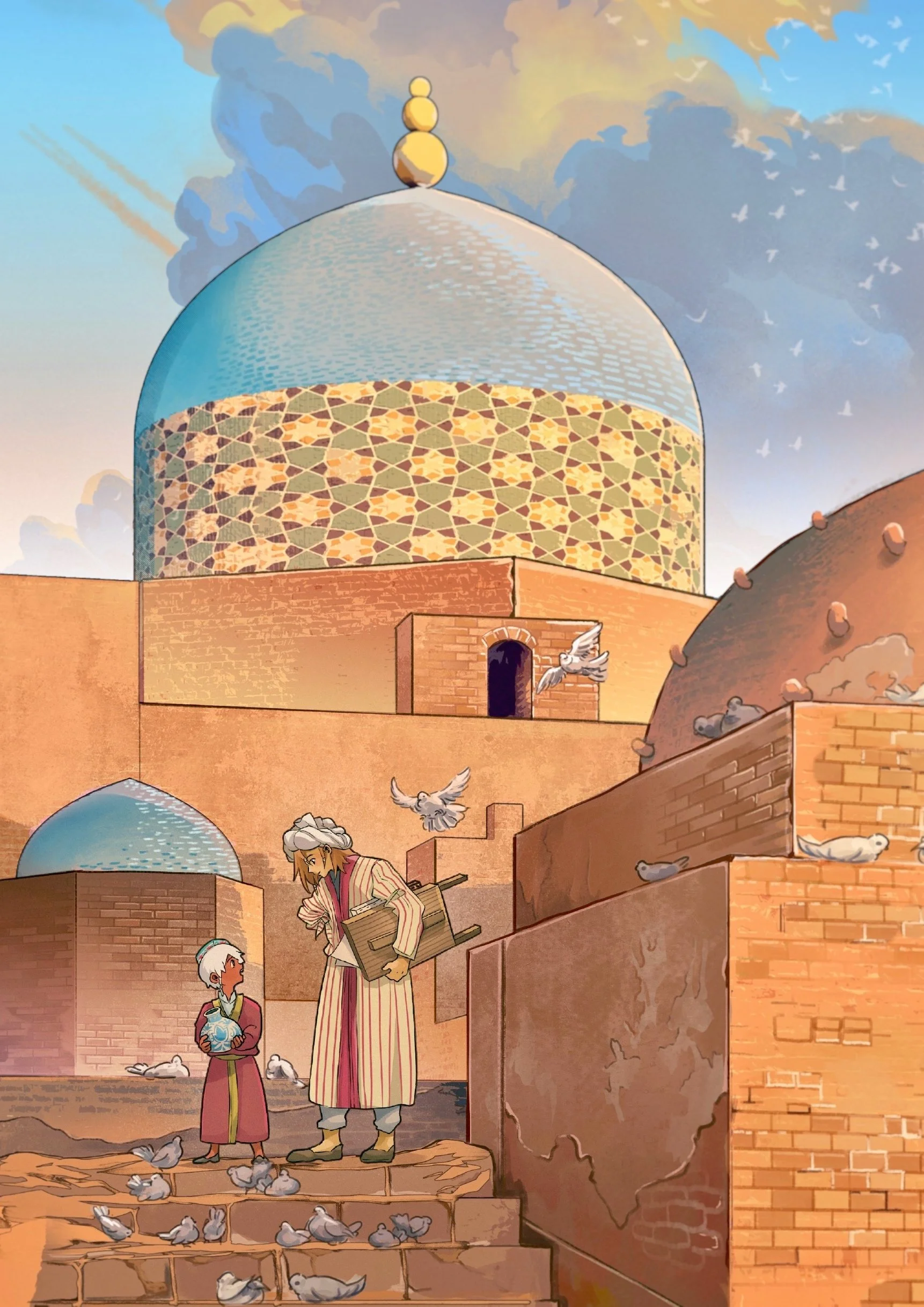
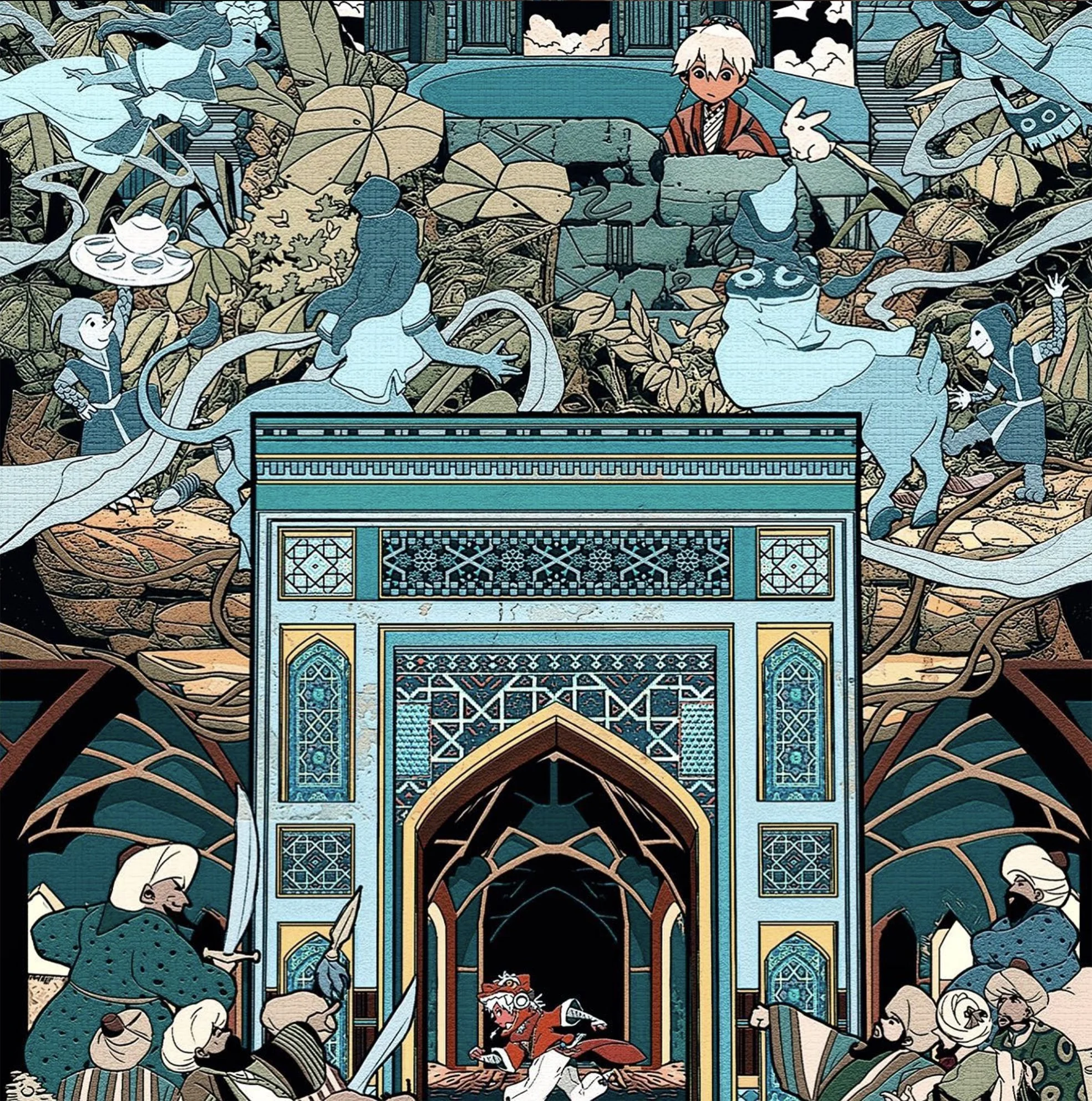
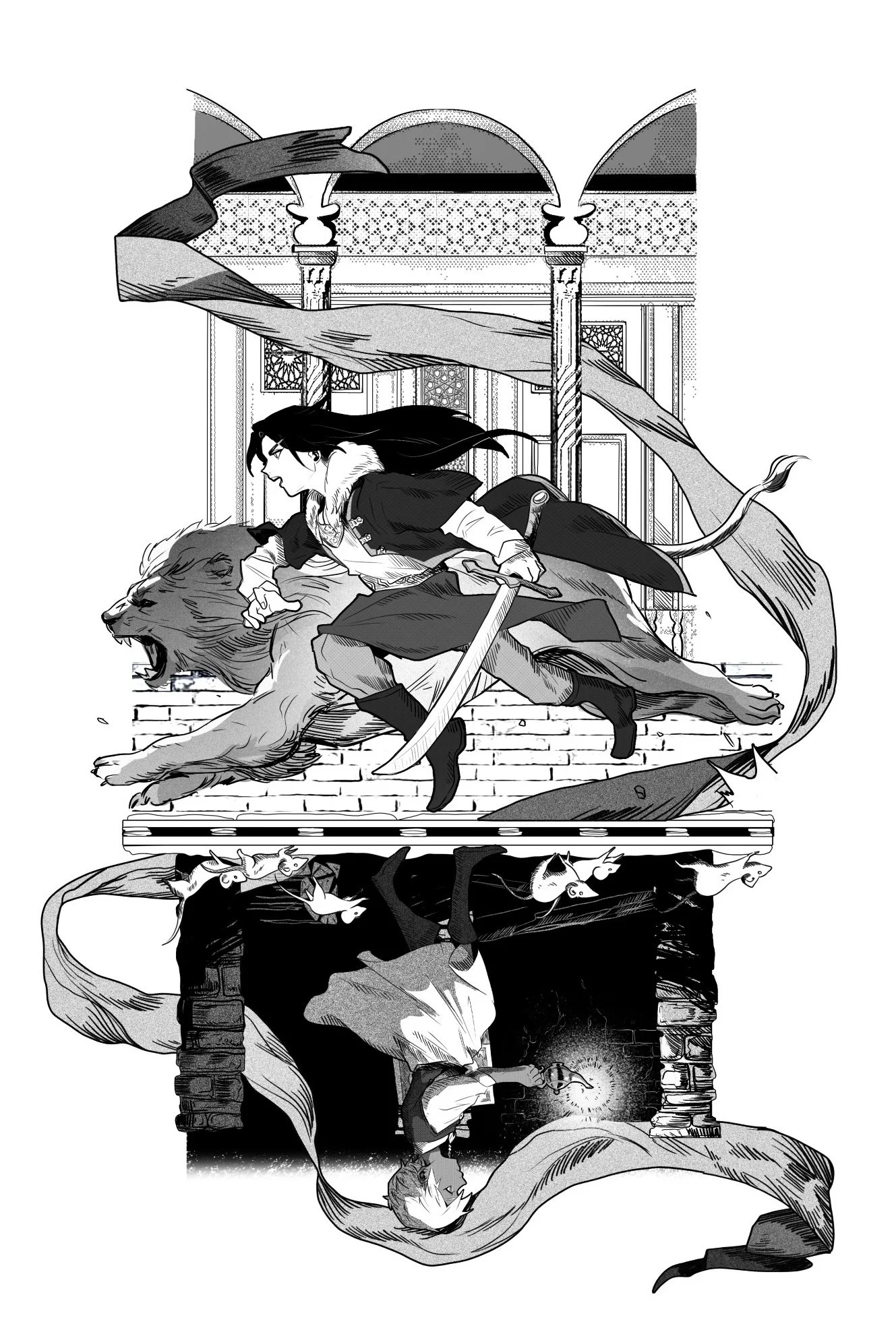
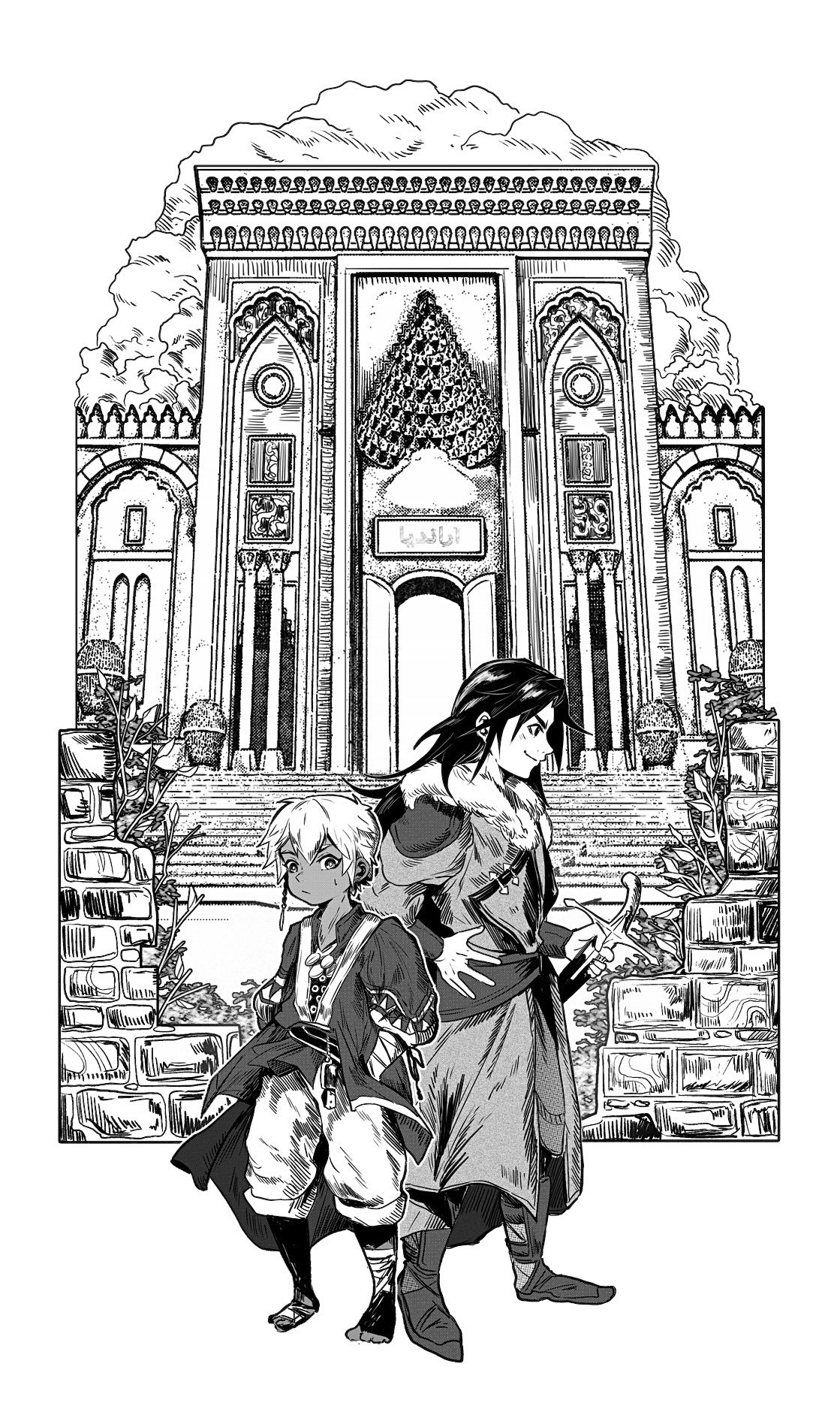
What interests me is that “between” is an active condition. In architectural terms, it’s the threshold. In Running Into the Millennium, Vidaar is positioned along an axis of movement, framed by a colonnade that creates a sequence of thresholds. He’s caught moving in between light and shadow. The columns are part of a corridor, emphasizing that he exists within a series of in-between states rather than having arrived at a destination. The background mural operates as a static monument while Vidaar moves across it at a human scale, so there’s tension between the permanence of empire and the transience of the individual passing through it.
Growing up, have you always gravitated towards art, or did you have other hobbies? Had you always intended to be an illustrator or architect, and did these pursuits turn out as expected? Have there been any unexpected lessons or happy accidents along the way?
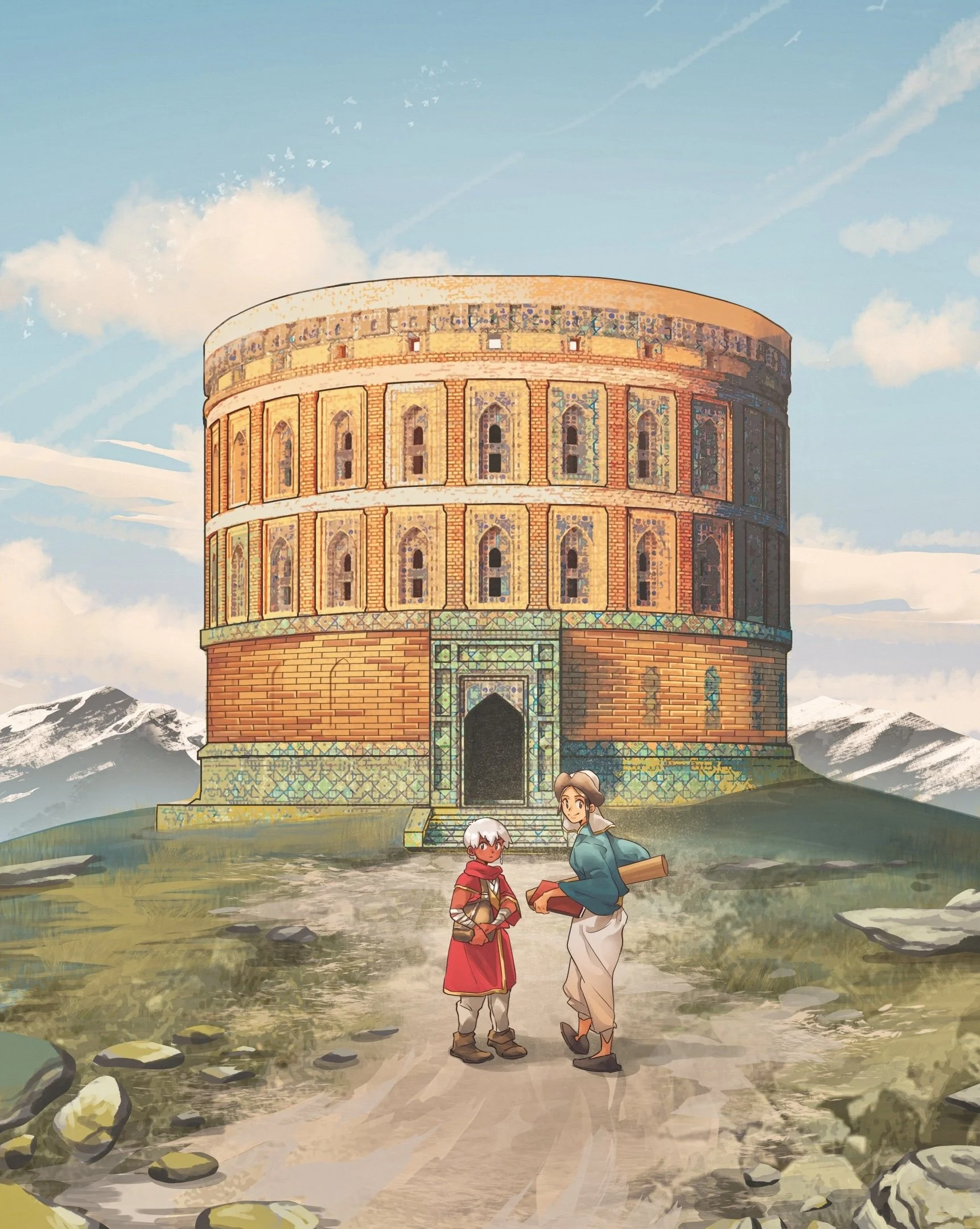
I’ve always gravitated towards storytelling, regardless of medium. My younger self enjoyed watching cartoons and reading books. At one point in high school, I even considered going to film school. However, I learned that storytelling isn’t confined to narrative arts. Architecture is storytelling too, albeit you inhabit it and experience it spatially.
So instead of choosing between illustration and architecture, I began to see them as operating on the same logic of sequence, framing, rhythm, and perspective. Some of the works that influenced me most reflect that overlap, like Sergei Eisenstein’s visual-audio diagram for Alexander Nevsky and Bernard Tschumi’s Manhattan Transcripts. I think the unexpected lesson was that I never really had to choose one path over the other, what a lot of people thought were separate disciplines turned out to be different expressions of the same instinct.
And what about Islamic architecture? There is certainly a rich history there, and it’s not an area that’s enjoyed much focus these days.
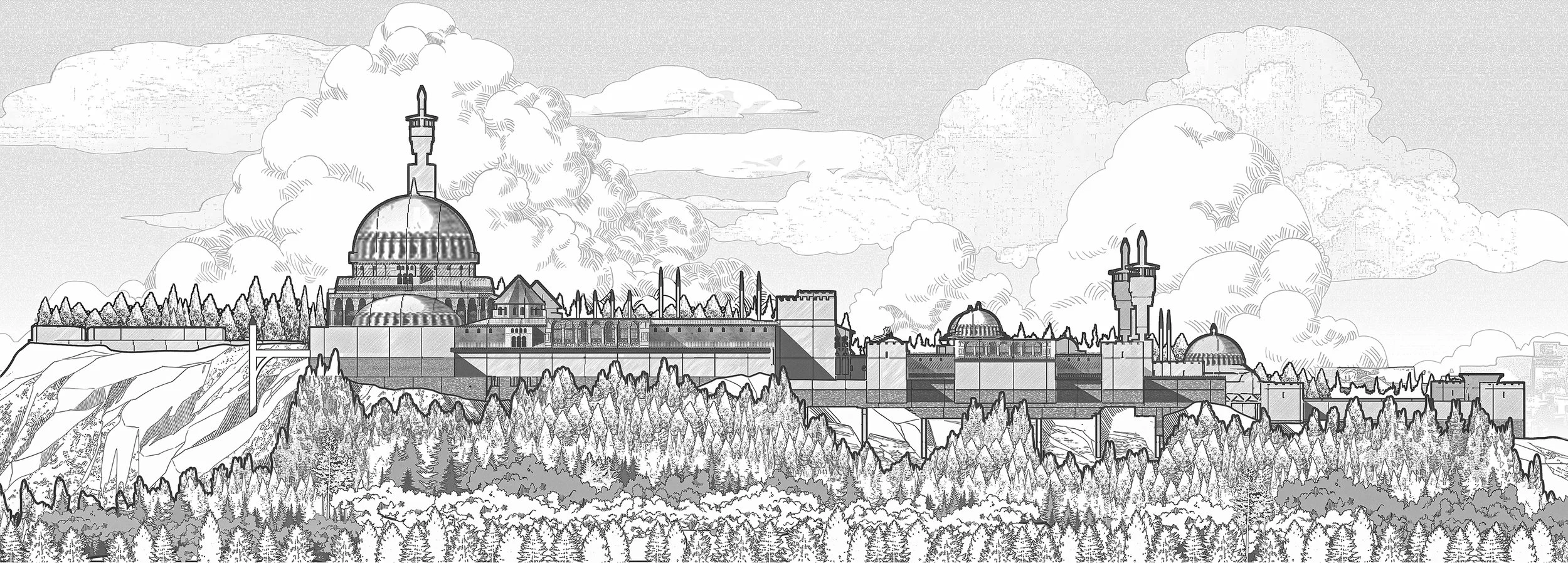
I think it may appear less visible in certain contexts, but Islamic architecture is actually very actively studied and appreciated globally. During my time at Harvard, I was fortunate to engage with it through the Aga Khan Program, which exposed me to the depth of research, material culture, and ongoing discourse surrounding it. What I personally find most interesting is how connected it is across regions. You start to see similar ideas like geometry, spatial organization, or material techniques appearing across very different places, but always adapted to local conditions. I like tracing those threads. I think that balance between shared systems and local variation is what makes it so compelling to me.
“Architecture taught me that storytelling isn’t confined to narrative arts. It’s something you inhabit and experience spatially. It reframed my work so that I no longer have to choose between illustration and architecture. Instead, I see them as using the same logic of sequence, framing, rhythm, and perspective.”
These are things you studied extensively at Harvard University… Was your interest in Islamic culture something that predates your time at Harvard or did it result from being exposed to it during your studies there?
Believe it or not, it all started because I was late to register for classes! As an undergraduate student at Syracuse, there were three options for an architecture course: Chinese architecture, European Classical architecture, or Islamic architecture... and I ended up in Islamic architecture by default as the other two courses were already packed.
What started as a pragmatic choice turned out to be something I find myself very passionate about. What fascinated me most about Islamic architecture is the way in which mathematics and art blended in seamlessly. Ornaments in Islamic architecture are not simply for show but also have structural integrity. I also appreciated the rich history that surrounded it. I think much of architectural studies has a Western European focus, but Islamic architecture broadened the geography considerably. It also reframes what was previously seen as a linear history into a much more interconnected one.
Which passion came first… illustration or architecture? Would you say you love both equally? Do you have any other things you’re passionate about?
Definitely illustration! I loved drawing before even knowing what architecture was. My grandma would give me prompts to draw and ideas on what kind of art to create. I’m passionate about writing as well, and I have other hobbies such as singing. I’m also a big history buff, so reading books and keeping up a travel journal from all the places I’ve been to is a kind of passion of mine.
You’ve also mentioned that you collect pens… what about pens attract you, and are there any specific pens you absolutely love?
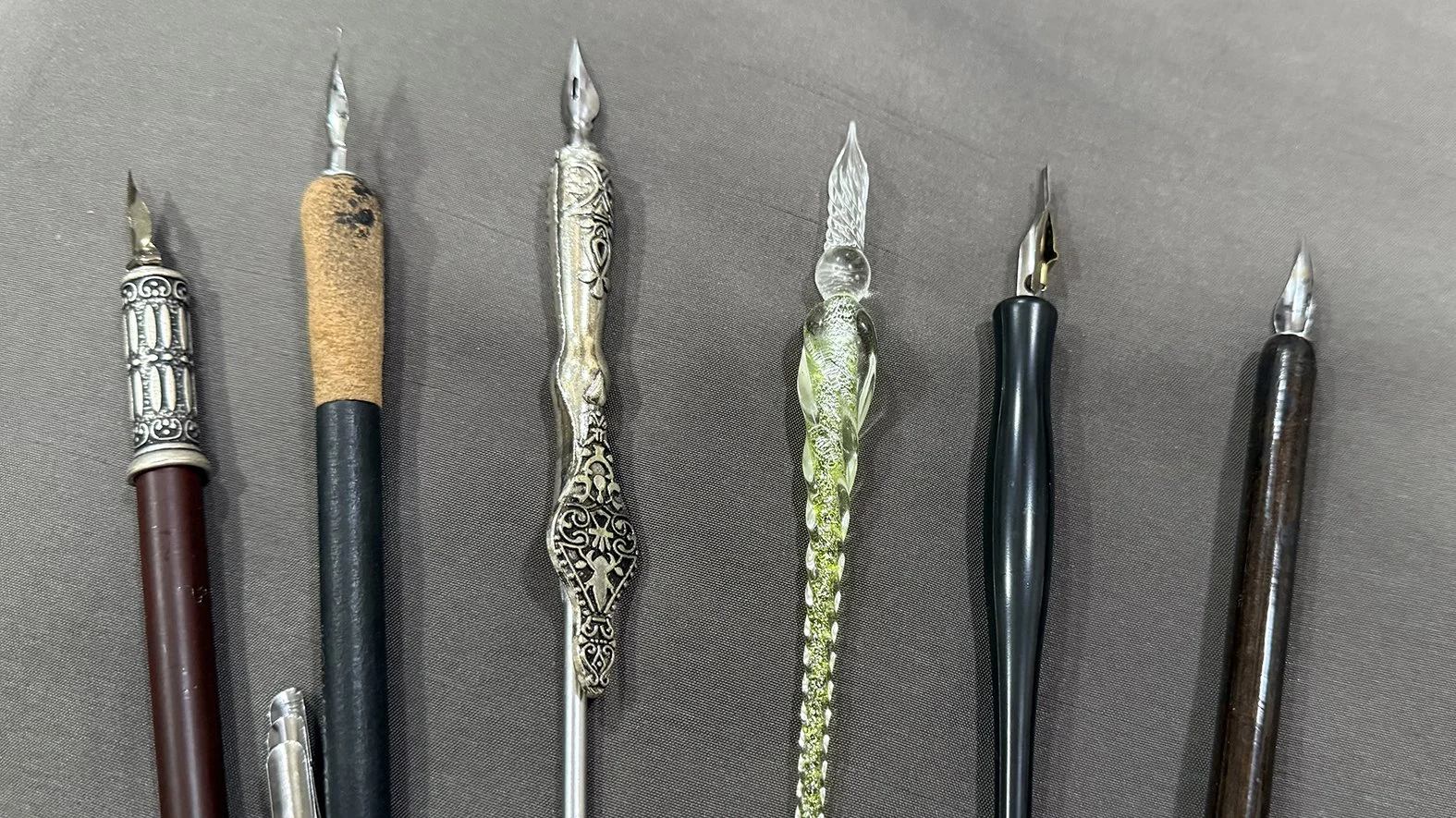
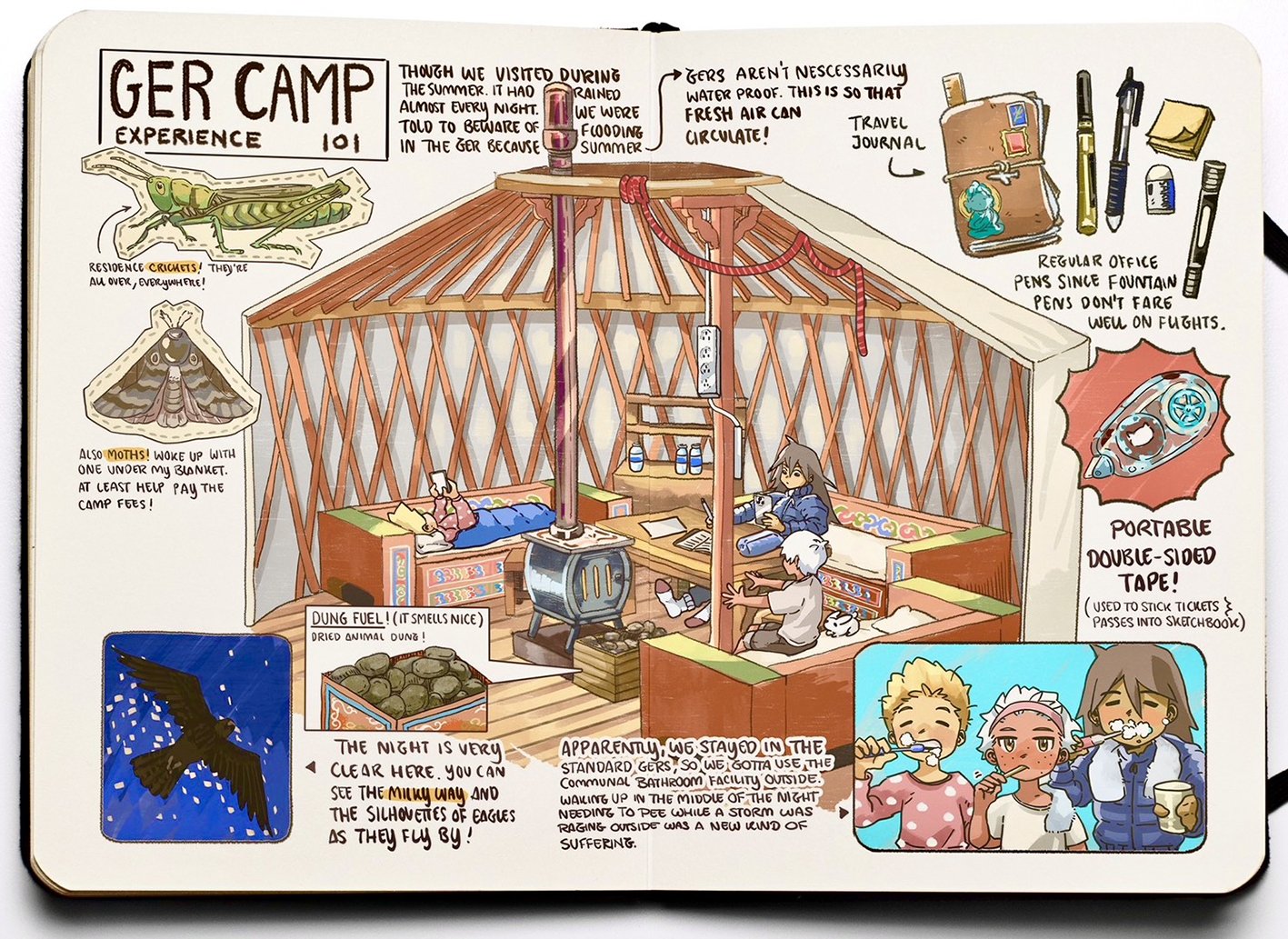
I enjoy the immediacy of pens. There’s very little distance between the hand and the mark, and you can’t undo endlessly. With a pen, you’ve just got to move forward. I think that is also a good metaphor for life. I’m especially drawn to dip pens and fountain pens, partly because of how responsive they are. The line can shift with pressure, speed, or ink flow. That said, I’ve learned they’re only as good as the surface they’re used on. I tend to be quite particular about paper. The texture and absorbency really change how the ink behaves, and that relationship between tool and surface becomes part of the final work. My favorites are felt tips and dip fountain pens. G-Pens are fine too, but I’m still learning how to properly control them.
Storytelling and structure are skills that can be traced to architecture… How else do you think your architecture background benefits you artistically?
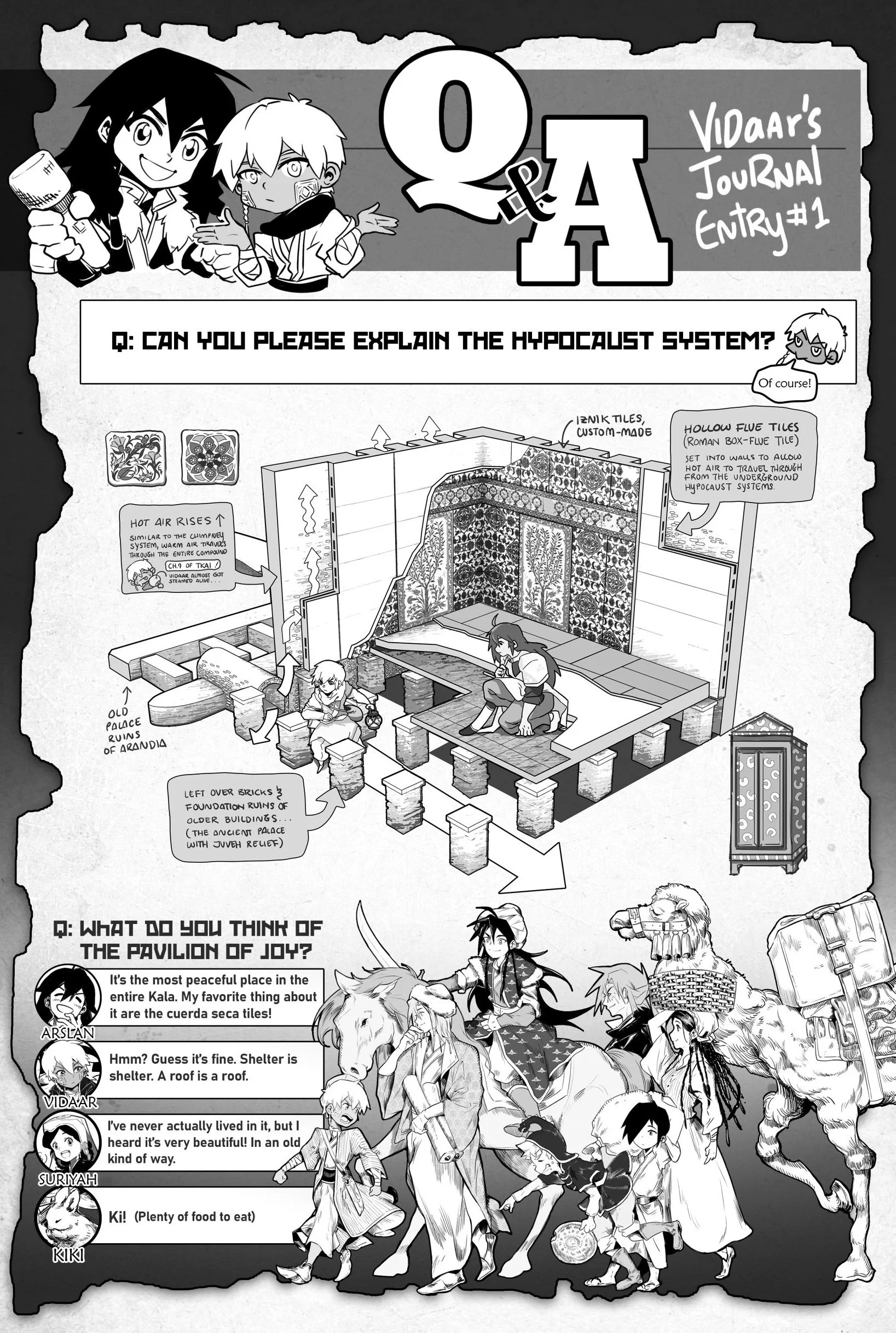
Architecture taught me that storytelling isn’t confined to narrative arts. It’s something you inhabit and experience spatially. It reframed my work so that I no longer have to choose between illustration and architecture. Instead, I see them as using the same logic of sequence, framing, rhythm, and perspective. This background allows me to use diagrams and visual systems to embed information within the work rather than explaining it outright.
Can you talk a bit about Between the Sand and the Sea? Not just the content, but also the format and the backstory of how it came to be.
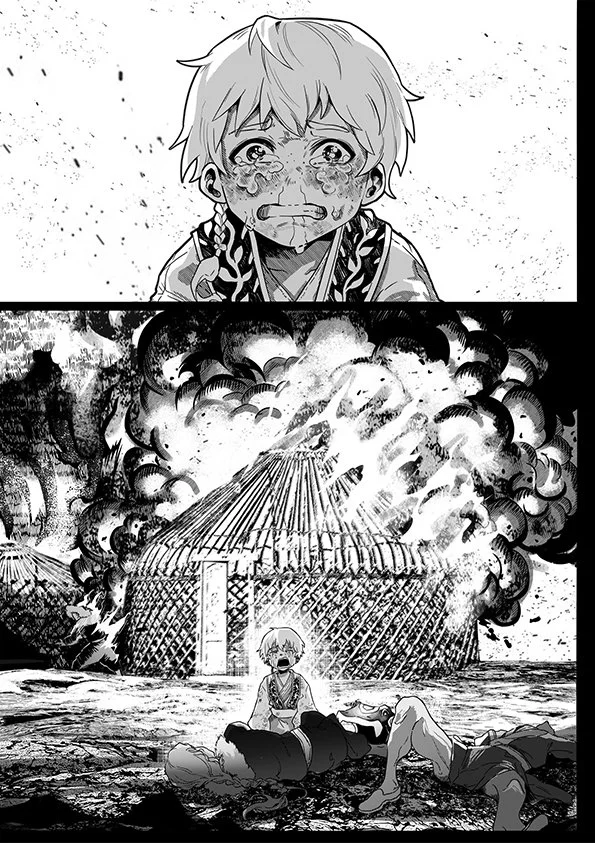
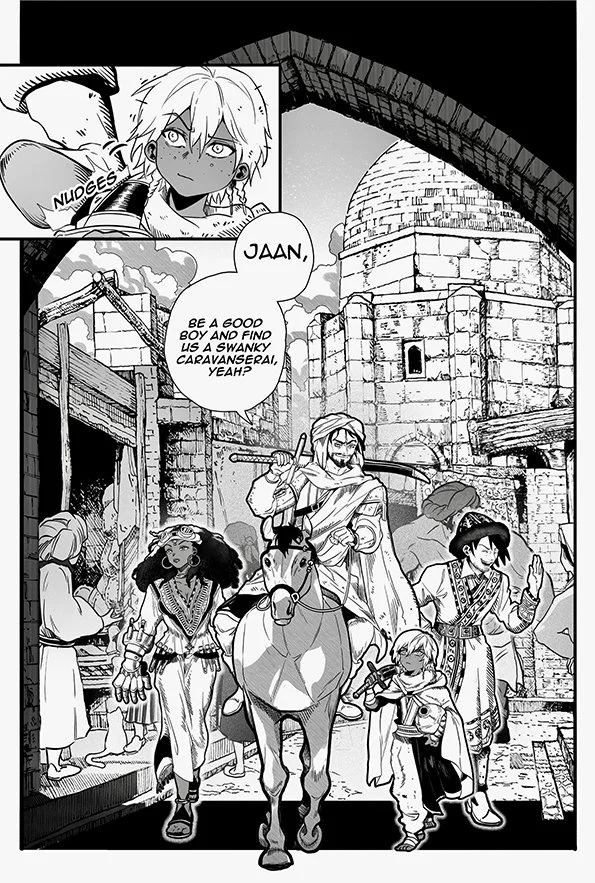
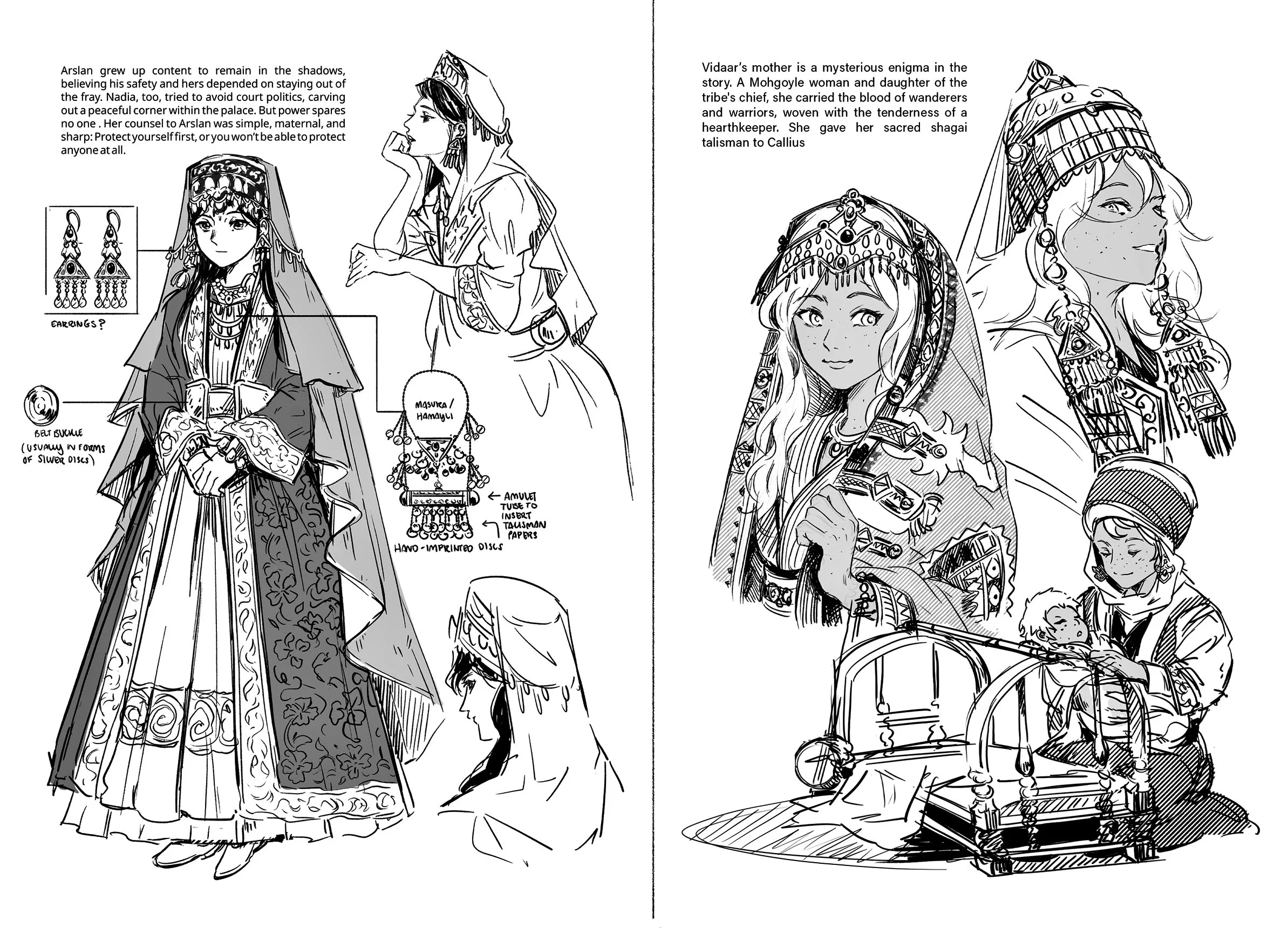
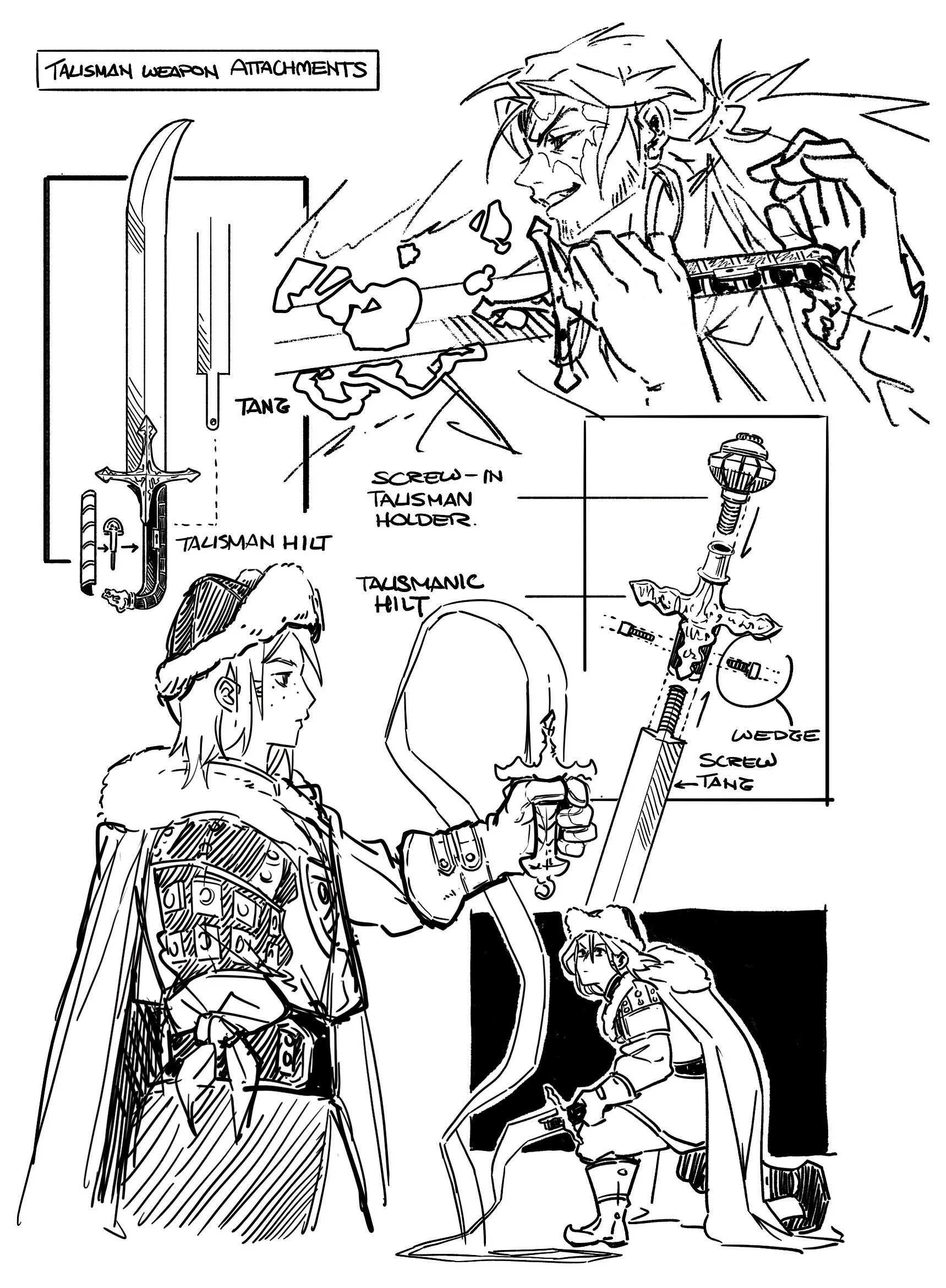
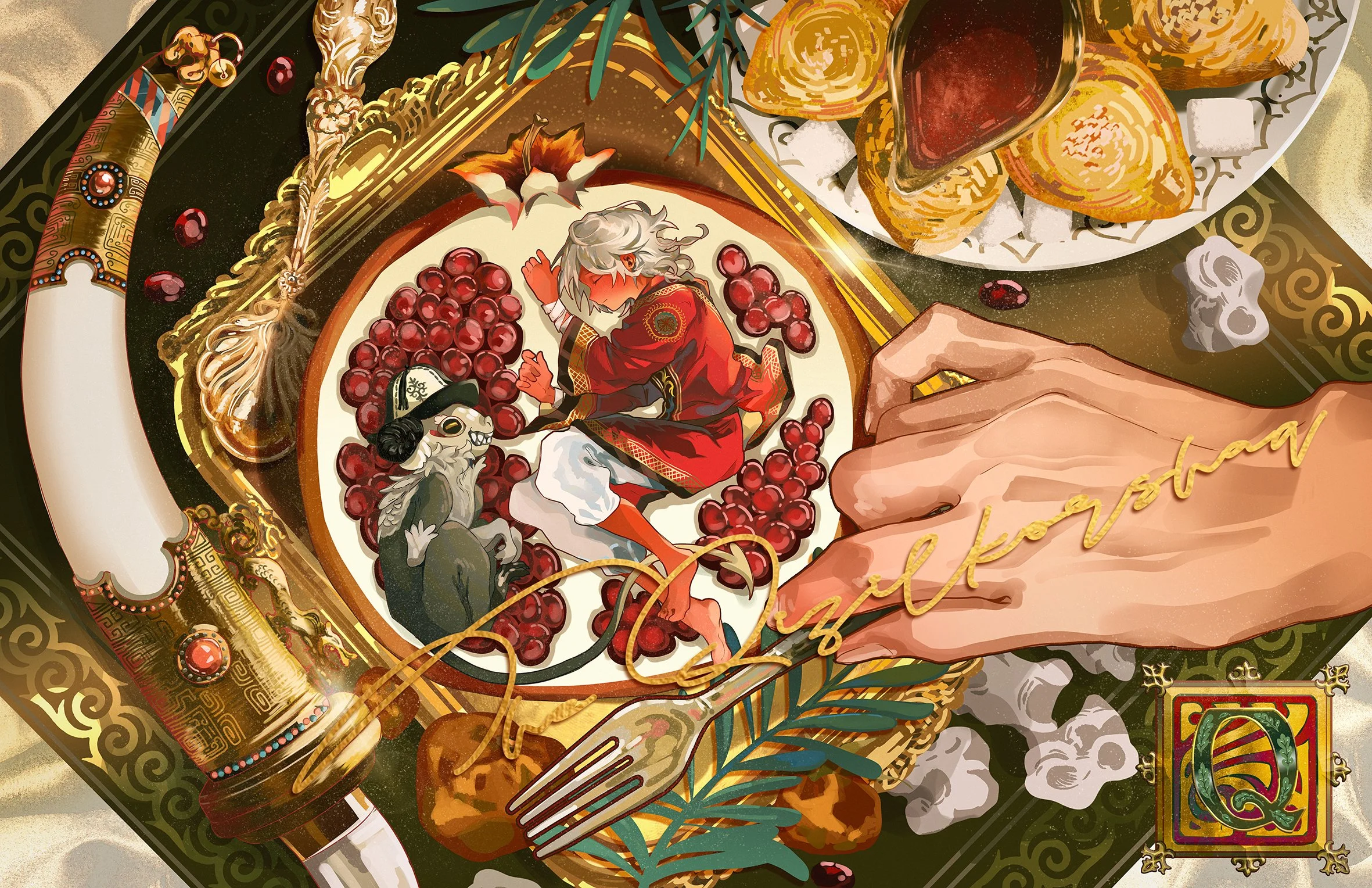
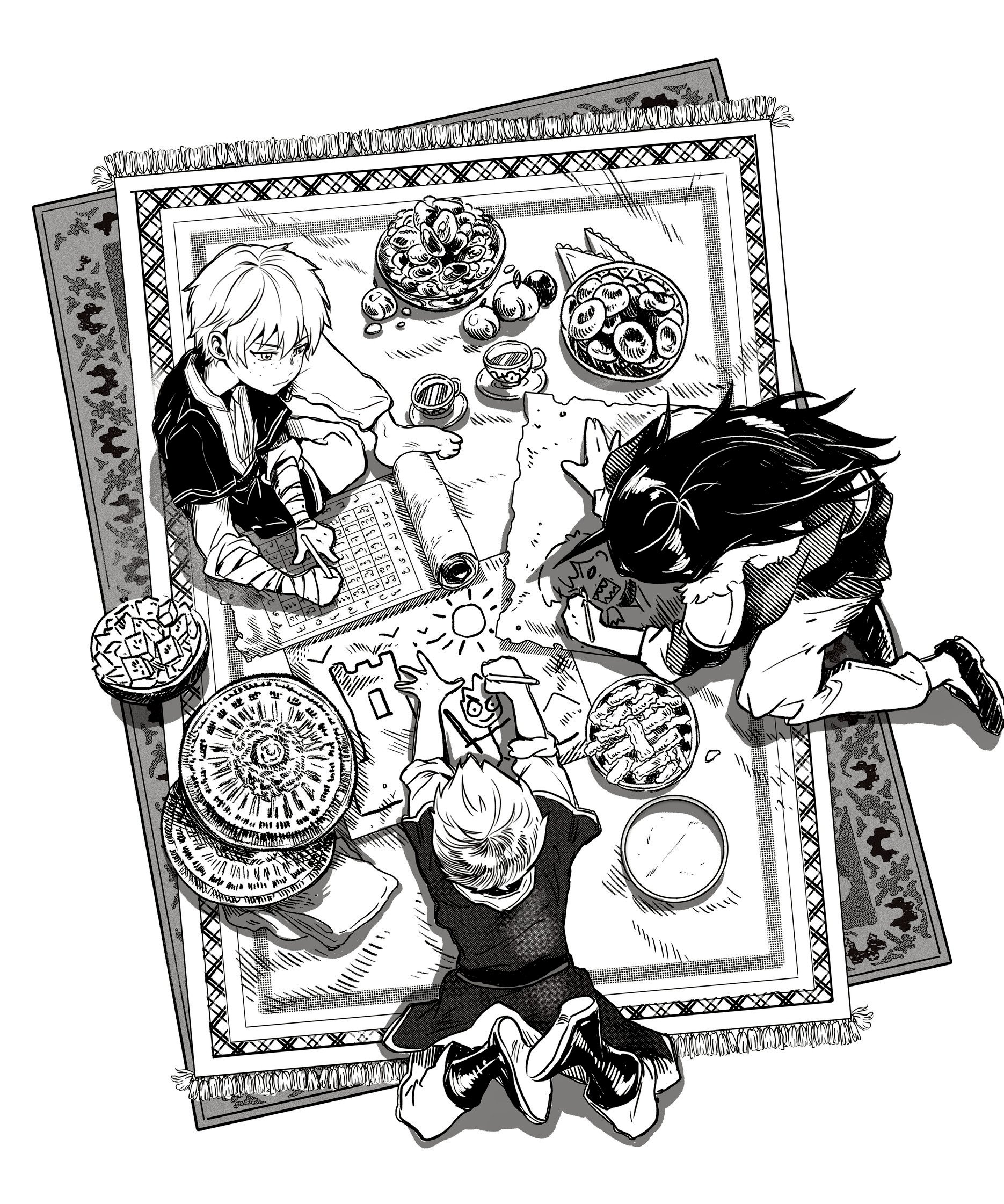
The world of Between the Sand and the Sea started very humbly as a role-playing game between my friend and me. That was where the core characters, Vidaar and Arslan, first took shape. What stayed with me was the tension between them and the sense that their story required a much larger world to exist in. That impulse eventually grew into my undergraduate thesis, where I began developing the setting more rigorously, drawing from historical and theoretical research, particularly around the interconnected networks of the medieval Islamic world. From there, the project continued to evolve across formats, almost like a hybrid between a novel, a visual archive, and an architectural world. So while it started from something informal, it became a sustained exploration of how narrative, history, and space can be woven together. That evolution is still very much at the core of how I approach the project today.
Your work contains some comics portions also. Do you follow comics and did you grow up with them? If so, which comics do you gravitate towards and have any influenced you?
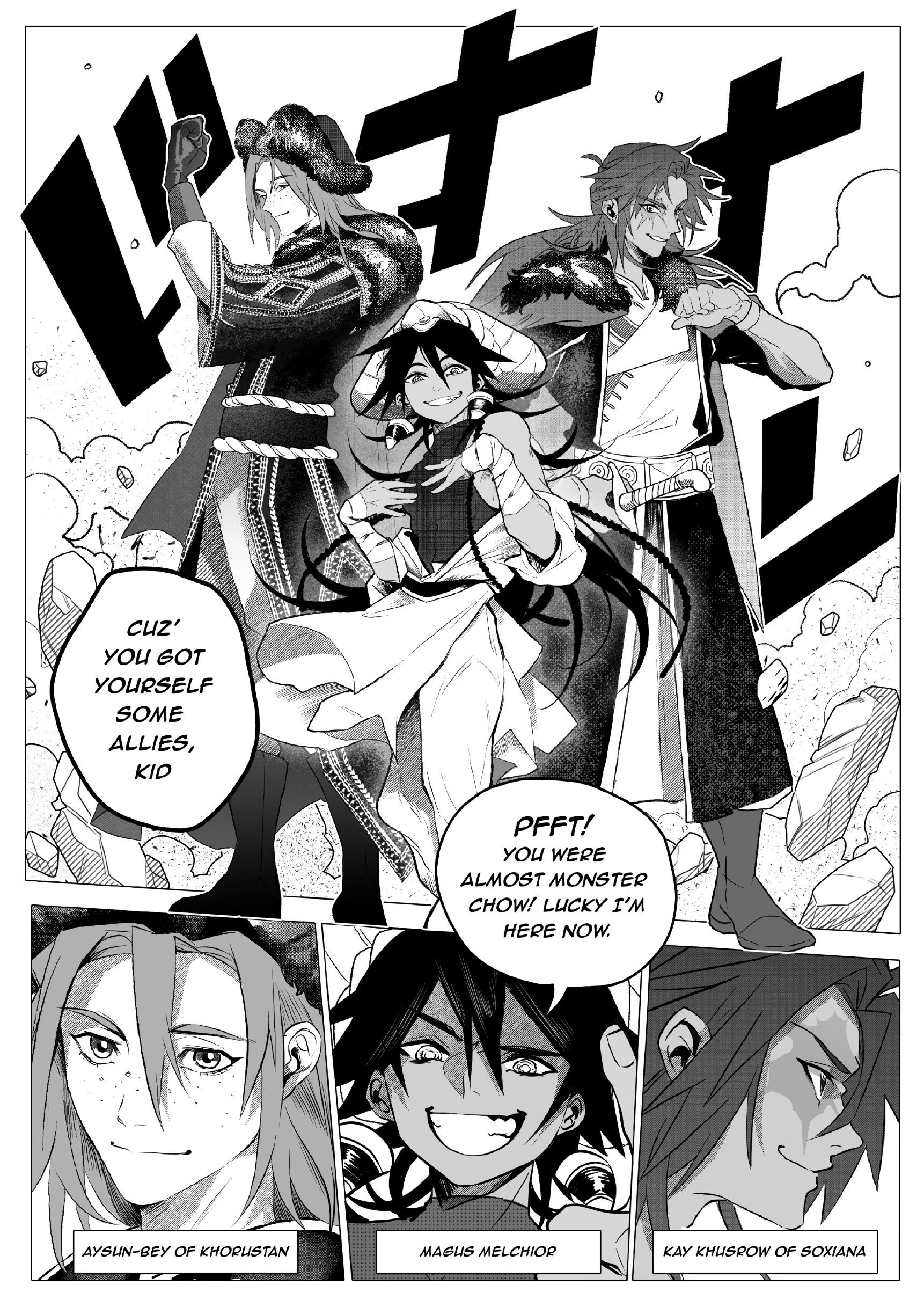
I wouldn’t say I come from a strictly comics background, but I’ve always engaged with them in phases. In college, I was especially drawn to Silk and Spider-Man, which I think shaped my appreciation for character-driven storytelling. More recently, I’ve found myself returning to manga, especially works like Vinland Saga (Askeladd being one of my favorite characters of all time). I think what I take from comics more broadly is a sensitivity to pacing and framing. That sense of rhythm and visual storytelling naturally feeds into both my illustration work and the way I construct scenes in writing.
As an architect, I’m sure there’s much satisfaction in building a world of your own. What aspects of your own word-building are you most proud of, and what aspects are you excited to further explore?
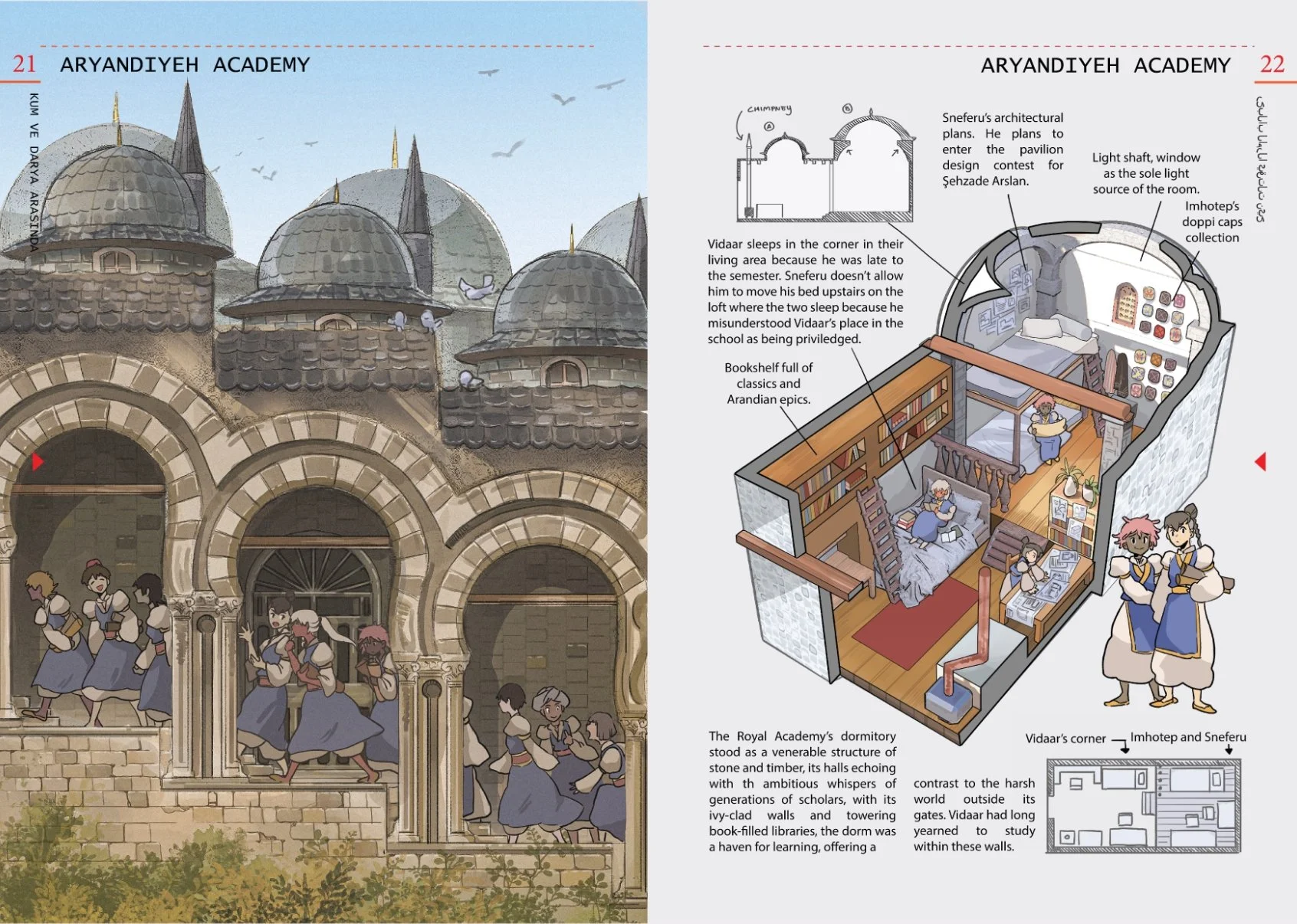
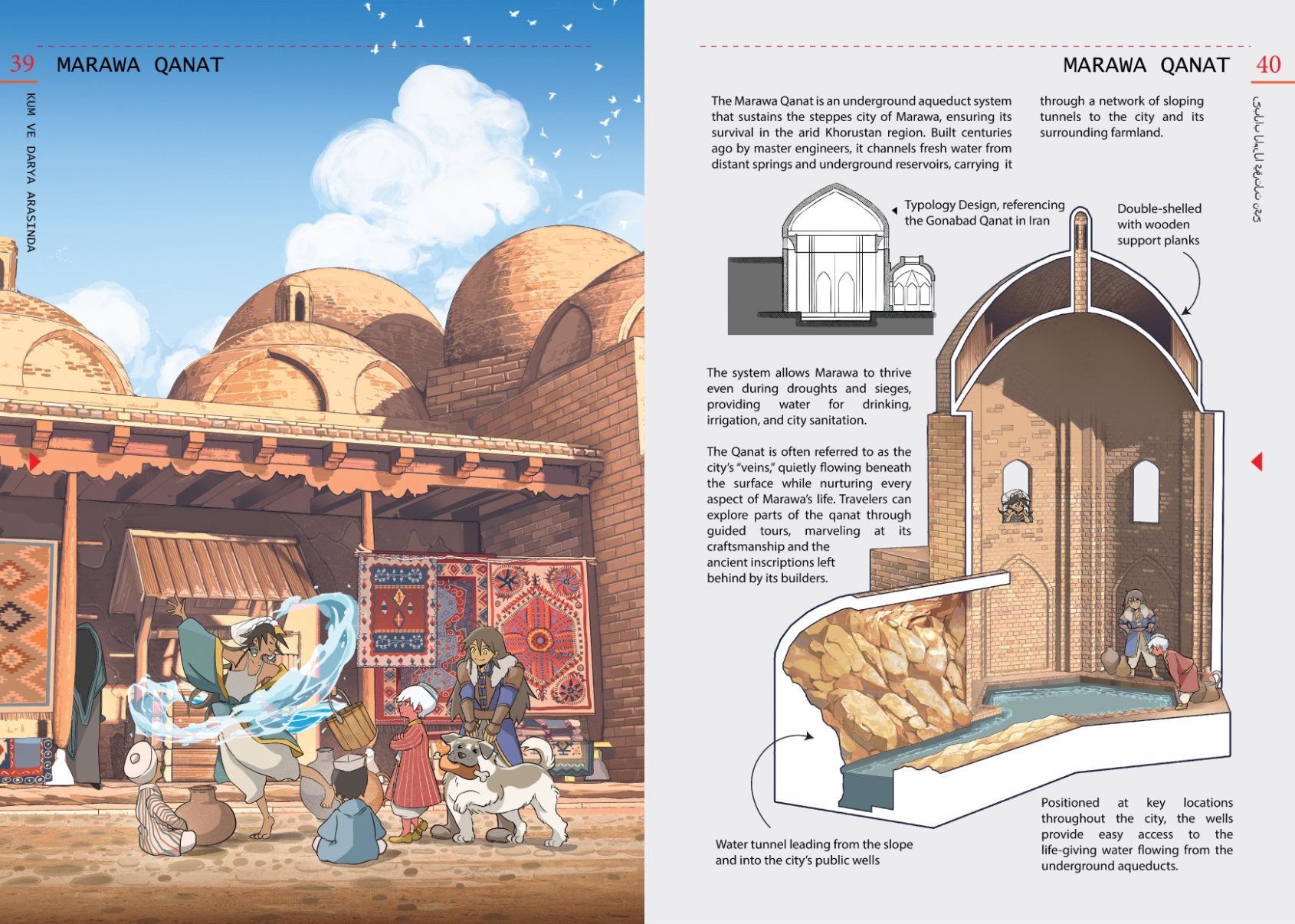
I'm most proud of the nuance and research-heavy approach I took to creating the setting. By treating the world as a hybrid between a visual archive and an architectural space, I believe I was able to build a setting that feels deeply rooted in history.
You’ve also seen much through your travels, right? What are things that have left the deepest impressions and stayed with you?
One thing I try to do in all of my travels is to really get to know the locals. I love spending time learning about their daily lives and what it means to actually live there. I think that teaches me more than information the internet or any tour guide could provide, for example, when school starts-stops for their children, how schools in Mongolia are categorized and named according to district numbers, what books people there usually read for fun and in what languages, even what they think of their pet yaks. While in Mongolia, I attended a nomadic art class at a Buddhist retreat. It was eye-opening to see how the locals approach art and what they see in the environment around them. While I try to best capture a lone subject like a yurt or a goat, the children drew streams, storms over the steppes at dawn, yaks roaming around yurts with them on horses. It made me realize that what we choose to frame (or isolate) is shaped by how we understand our relationship to the world. And that awareness continues to influence how I construct both images and narratives.
And much of these travels informed the Sojourn sketchbook series?
Yes, most of what I learned from my travels is already translated into the Sojourn Series. I still have yet to make a book for all of my travels, but I’m planning to in the long run.
What do you want to convey with your work, what do you want to instill in potential audiences?
If possible, I want my audiences to get something out of my work apart from the aesthetic qualities. What I hope to convey is a way of seeing how histories, spaces, and identities are constructed, and how they overlap. If someone walks away thinking differently about a place, or noticing the structures behind what they see, I think the work has done something beyond just being viewed. That’s partly why I gravitate towards combining storytelling with architectural modes of thinking. Diagrams, spatial sequencing, and visual systems allow information to be embedded within the work, rather than explained outright.
Do you mostly create these works alone or is there collaboration involved?
I work primarily independently, especially as the project has grown across different media. I tend to move between writing, illustration, and spatial thinking depending on what the work calls for at the time. That said, the origins of Between the Sand and the Sea were collaborative. It began as a role-playing project with a close friend, and that exchange was where the core characters and emotional dynamics first took shape. Even though the project has since evolved into something I develop on my own, that initial collaboration remains an important foundation. It shaped the way I think about character and dialogue, and I still see it as part of the work’s DNA.
Are there difficult parts to the process? Are writing or illustrating separate stages for you or do you tackle both concurrently?
I’d like to say that I’m not as adept at graphic design work as I am at my drawings or design work. Coming up with the layout to best present the work is always the hardest part of the process for me. I don’t work in concrete stages per se, so I tend to hop between writing and illustration according to what I feel like doing most at the moment.
You’re more than adept at creating art by hand and digitally, but do you have a preference between the two?
Nowadays, I work mostly digitally, largely because of the pace of production. It allows me to move from idea to finished work more fluidly. While I still enjoy working by hand, digital mediums save time and are more efficient when you’re on a tight schedule. Traditionally drawing on paper needs equipment (which are sometimes pricey) and care. Mistakes are harder to undo. Then, it would have to be scanned digitally anyway. Working digitally from the start saves both time and energy, ensuring the workflow is the most efficient. Still, while digital tools are more practical for my current workflow, I don’t see it as a replacement, more of a tool for convenience.
From your experience, is there anything you find valuable as a lesson or advice that you can share with aspiring artists?
I think it’s important not to feel constrained by the medium. Some of the most meaningful progress in my work came from moving between disciplines rather than staying within one.
What’s your vision for storytelling and illustration in Thailand? How would you like to see art and architecture evolve?
That is quite a big question for tiny ol’ me to answer, haha. I think what I’d like to see more of in Thailand is work that moves fluidly across disciplines, rather than staying confined within them. There’s already a strong visual culture here, but I think there’s still room for deeper integration between storytelling, illustration, architecture, and research, where each informs the other rather than existing separately. At the same time, I think there’s value in work that is both locally grounded and globally engaged. Thailand has a very distinct cultural context, but it doesn’t have to be isolated from broader conversations.
Do you have any future projects or goals? Where is best for audiences to find you and your merchandise?
My immediate goal is to continue working on the Sojourn Sketchbook series. I’m currently working on Uzbekistan (scheduled for release by the end of 2026) and am planning to move on to other countries after. I’m also developing a full-length novel for the world and its characters. It is in its agent querying stage at the moment. I hope to release another character design sketchbook sometime in the future, but that is mostly still in the clouds right now. As for where to find me, I’m mostly active on Bluesky and Instagram. You can find me as Lipika_Vethaka on both social media sites. Also, I have a Friendii page in which I sell my books and merchandise. You can find me there as well.
For more information on Lipika, visit her profile here for a brief biography and her social media links.
Her entry for the April 2026 issue, “Running Into the Millennium,” can be seen in Issue 66 of bkk UNZINE and don’t miss her video interview with Sketchman Boris on our YouTube channel at the link below!
Special thanks to Lipika Vethaka for making this interview possible, and keep an eye out for future collaborations with our featured artists!
