


INTERVIEW:

In 2026, bkk UNZINE is working with our featured artists to develop the themes for each month’s issue.
The featured artist for February and the 64th edition of bkk UNZINE art magazine is Bangkok-based artist Porszaaaa, who explores storytelling potentials hidden within diverse mediums and was gracious enough to join us at UNZINE 95 for an interview about her art, background and thoughts on future possibilities.
Thank you for collaborating with bkk UNZINE as this month’s featured artist and for coming up with the theme of “Ride.” Can you tell us what was the inspiration for this theme and how you hope artists would interpret it?
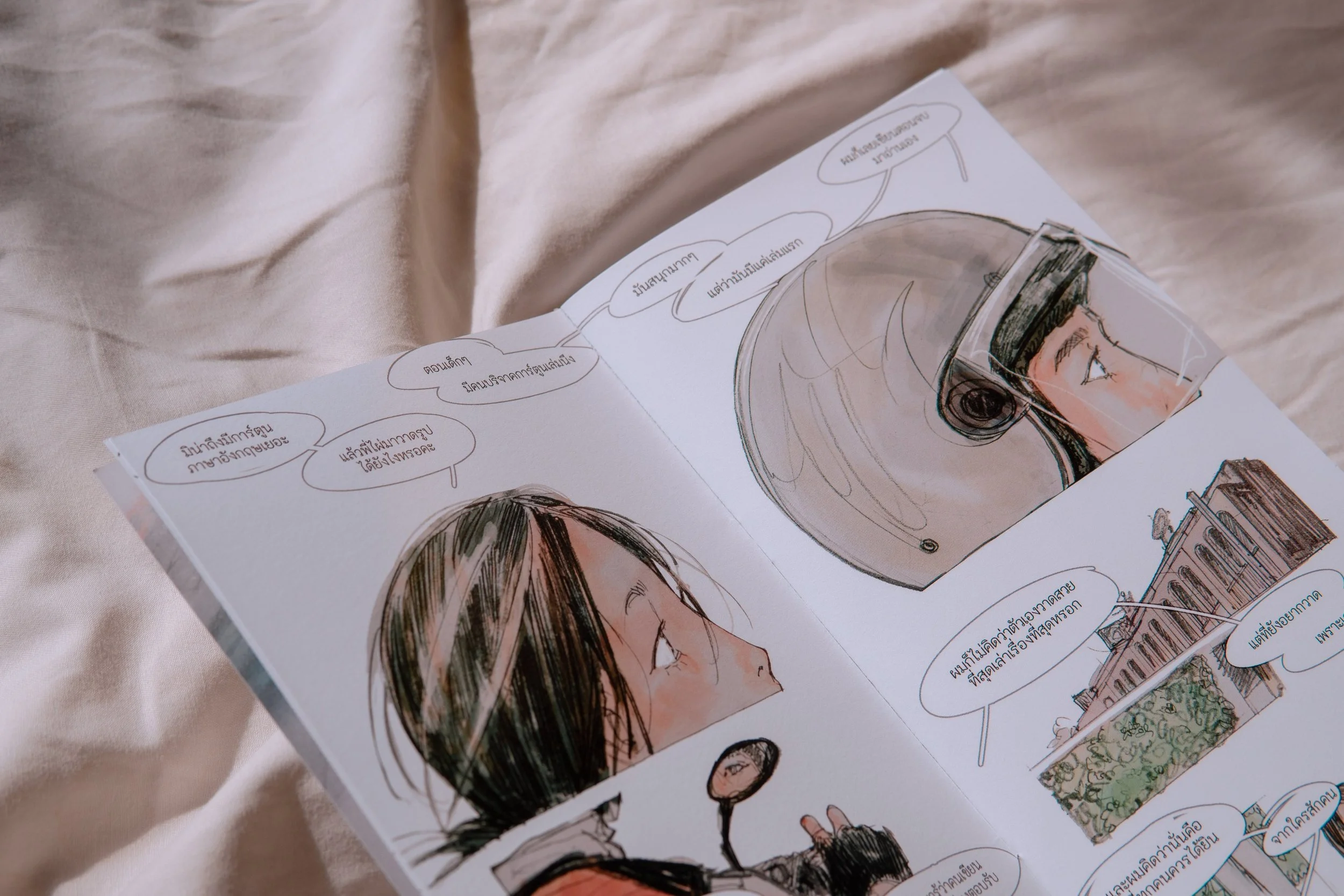
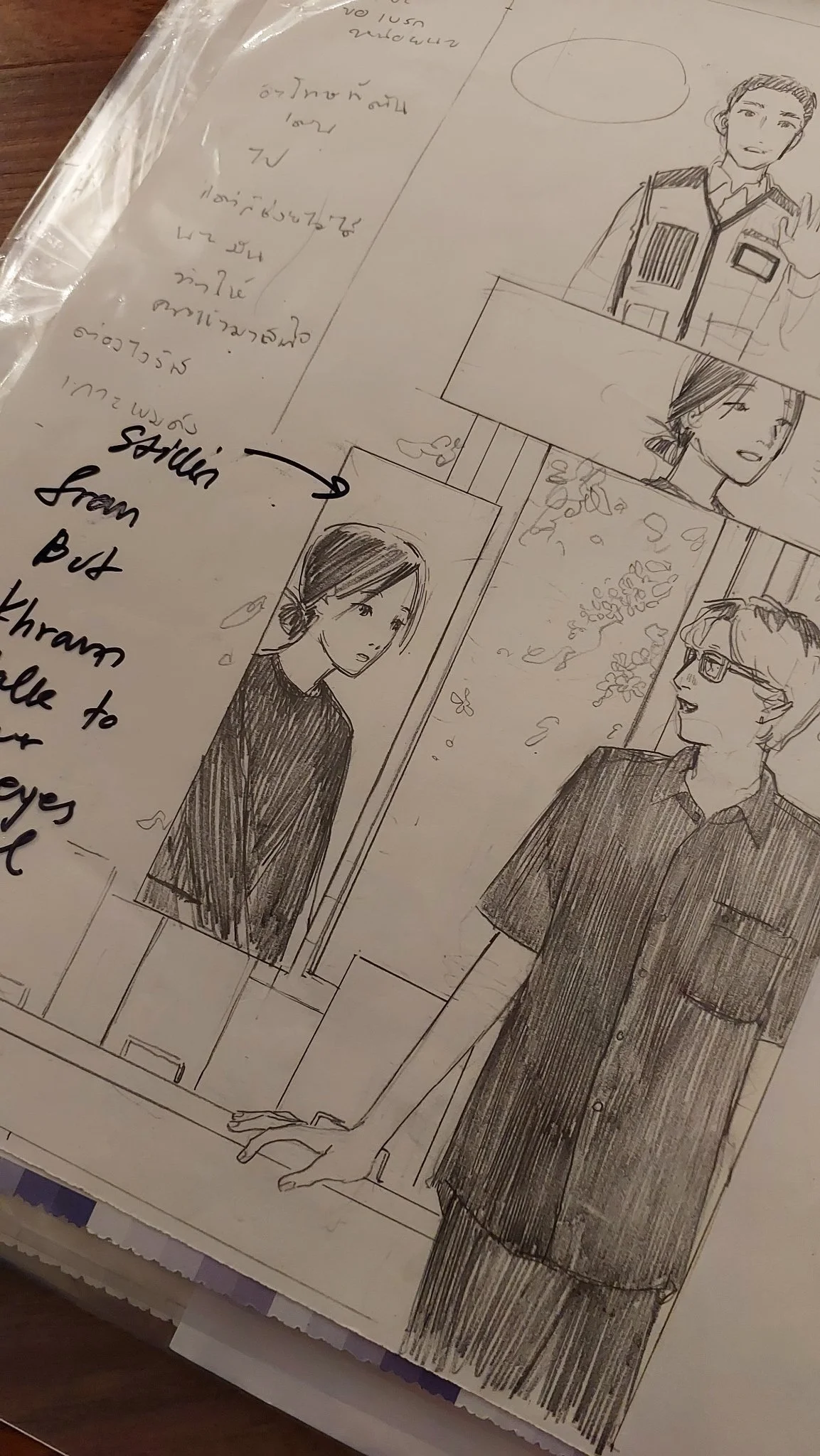
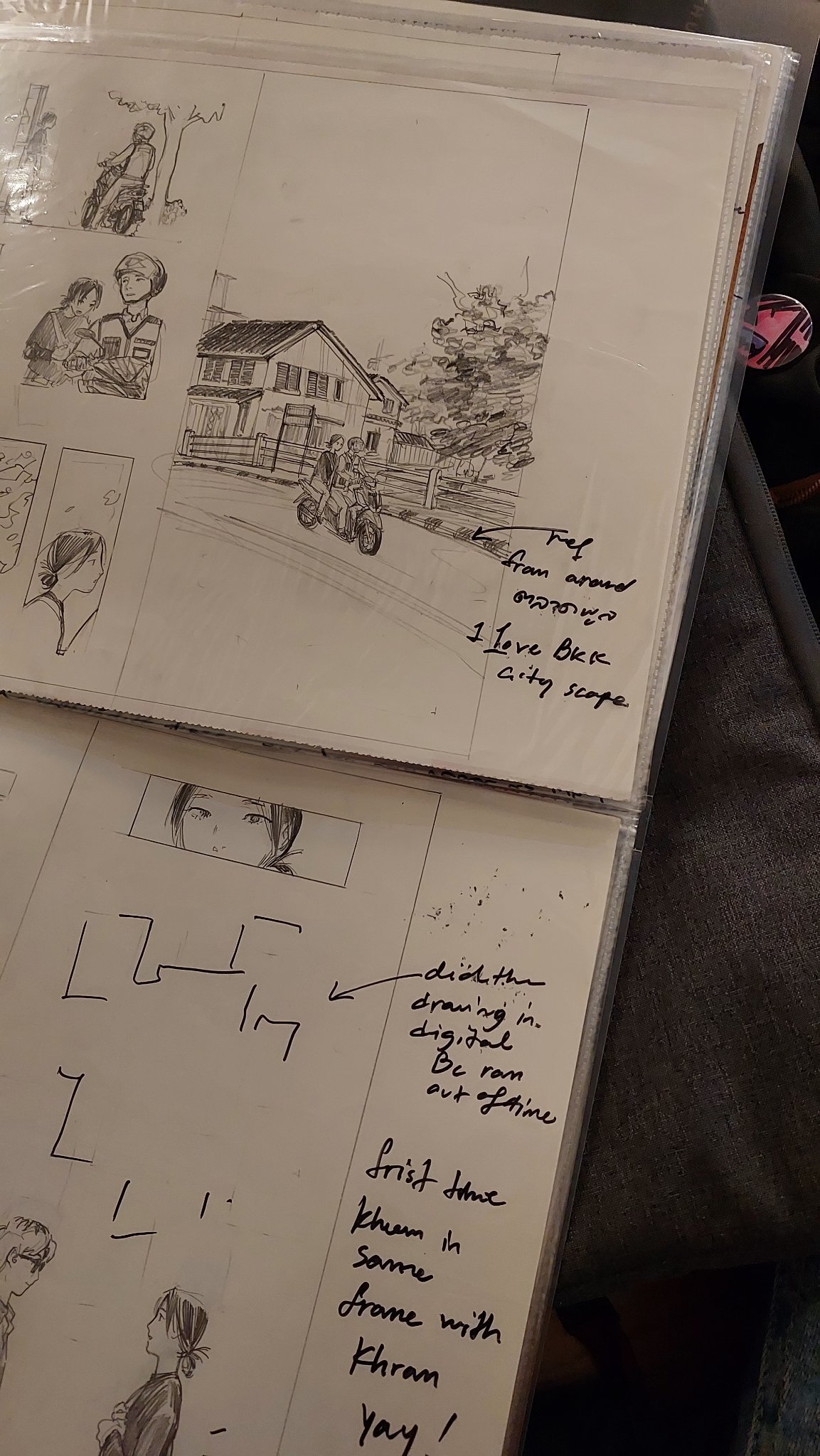
The theme picture I submitted is my favorite page from ToGather, my thesis comic, where motorcycle taxi driver Pai and main character Khem share a conversation about their creative journey. The scene is inspired from my experience of riding motorcycles from going to school, university and work. During this time of wind and traffic, I would think and got some ideas for my work.
As for your own submission, “Piggyback Ride,” can you elaborate about the meaning of the piece and the story behind its creation?
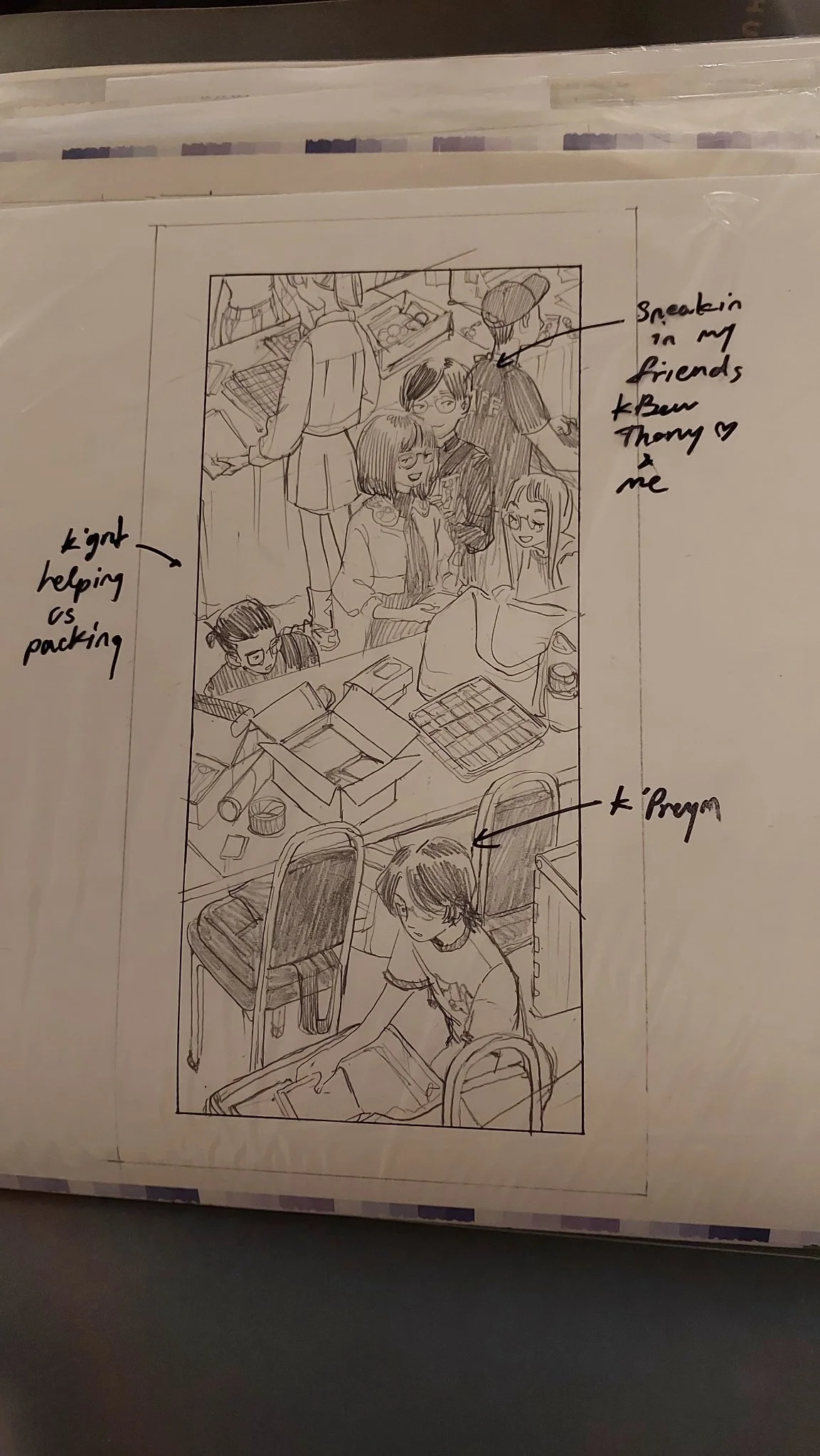
“Piggyback Ride” features Zaii and Jin, Preym’s and my original characters from our comic Stagecall. These two are characters that I always draw when I don’t know what to draw. For this one, I wanted to explore something I haven’t done much, which is portraying action. Action comics are the hardest genre for me to draw and make visually impactful. For this piece, I tried letting the audience make the closure of the jump, and also played with the idea of movement through a piggyback ride.
What kinds of hobbies and pastimes did you enjoy growing up? Have you always had an interest in art? If so, can you tell us about ways you expressed your creativity when you were little?
I have always been making art. My mom would make paper dolls and taught me how to draw different things. She is always one of the greatest artists to me. I would have one notebook to draw in during school.
I also attended dance class and danceshows, which allowed my mom to dress me up. That was also the start of my interest in fashion and led to my sewing hobby.
“I hope every artist out there reminds themselves that they are talented, and that simply starting a piece — and even finishing it enough to post — is already a great achievement.”
How did you discover comics, and when did you decide you wanted to pursue being a comic artist yourself? Were you always confident of this path or did you have any misgivings?
I call myself a storyteller who is currently interested in publications, but I want to explore other media and tell my own unique stories, not limited to comics. I wasn’t interested in comics at all in my first two years of university. I never thought my senior project would be a comic. What I believe in is communication — choosing the medium that best delivers the message — and allowing the form to shape how the story is experienced. Since the topic of my thesis was about talking to the comic community, it had to be a comic for comic readers.
Can you tell us about your process as a storyteller and as a visual artist? Do you get initial inspiration from a narrative perspective or a visual one?
Working from narrative is easier; however, I tend to get inspired by visuals first and then have to build the narrative around them. I have at least 100 compositions and styles I want to try in my notes, but without any context to tell a story. Flower Blanket is one illustration collection that took me seven years to develop its narrative about body dysmorphia and growning to be who I wanted to be.
Do your ideas mostly come from personal experiences or from things you notice and wish to have commentary on?
I use personal experience to help me stay connected to a project long enough to make it exist. The projects I want to make a comment on usually come from a simple desire to talk about something and hope that someone will listen, through compelling illustrations and the format of the medium.
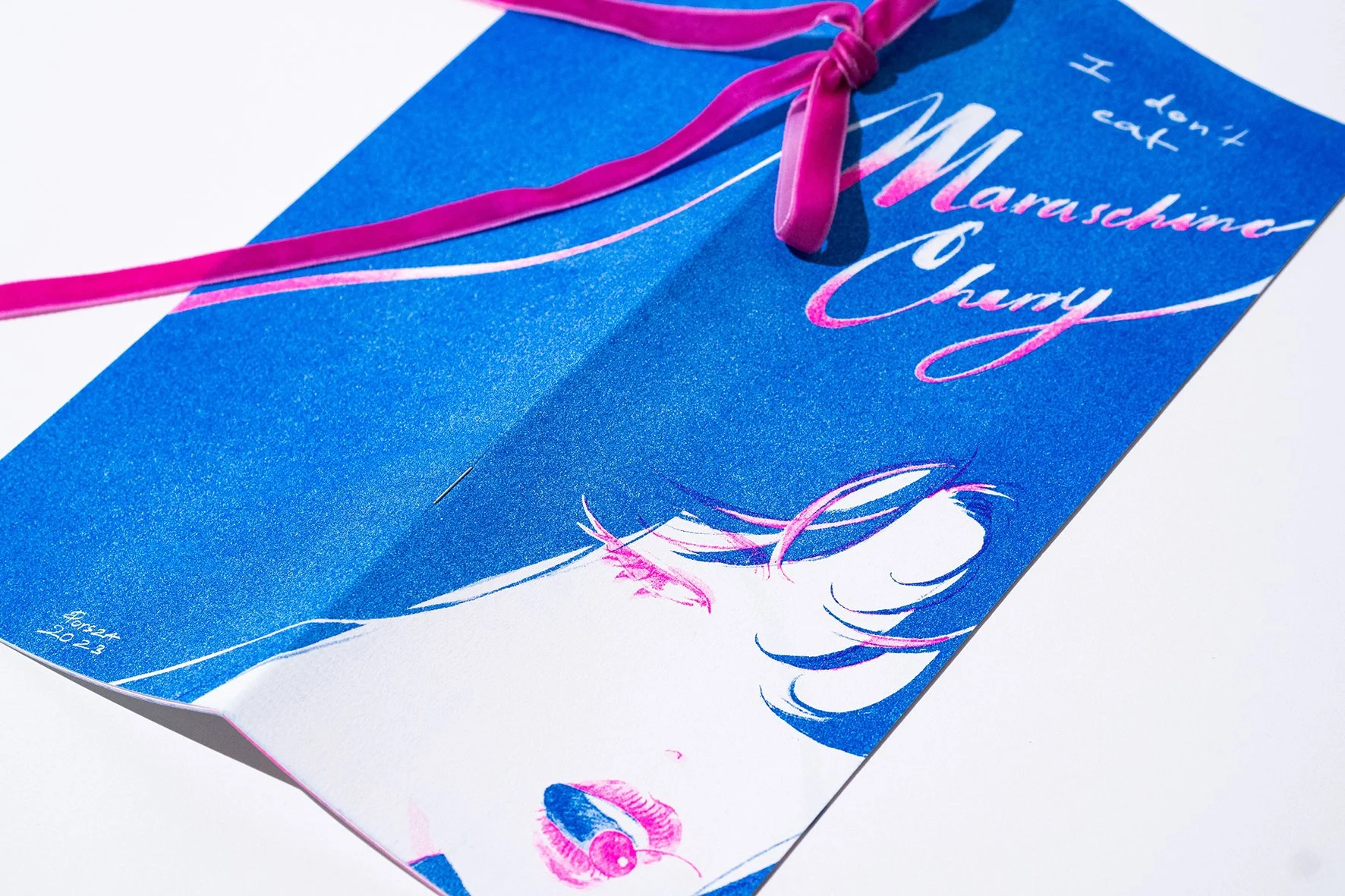
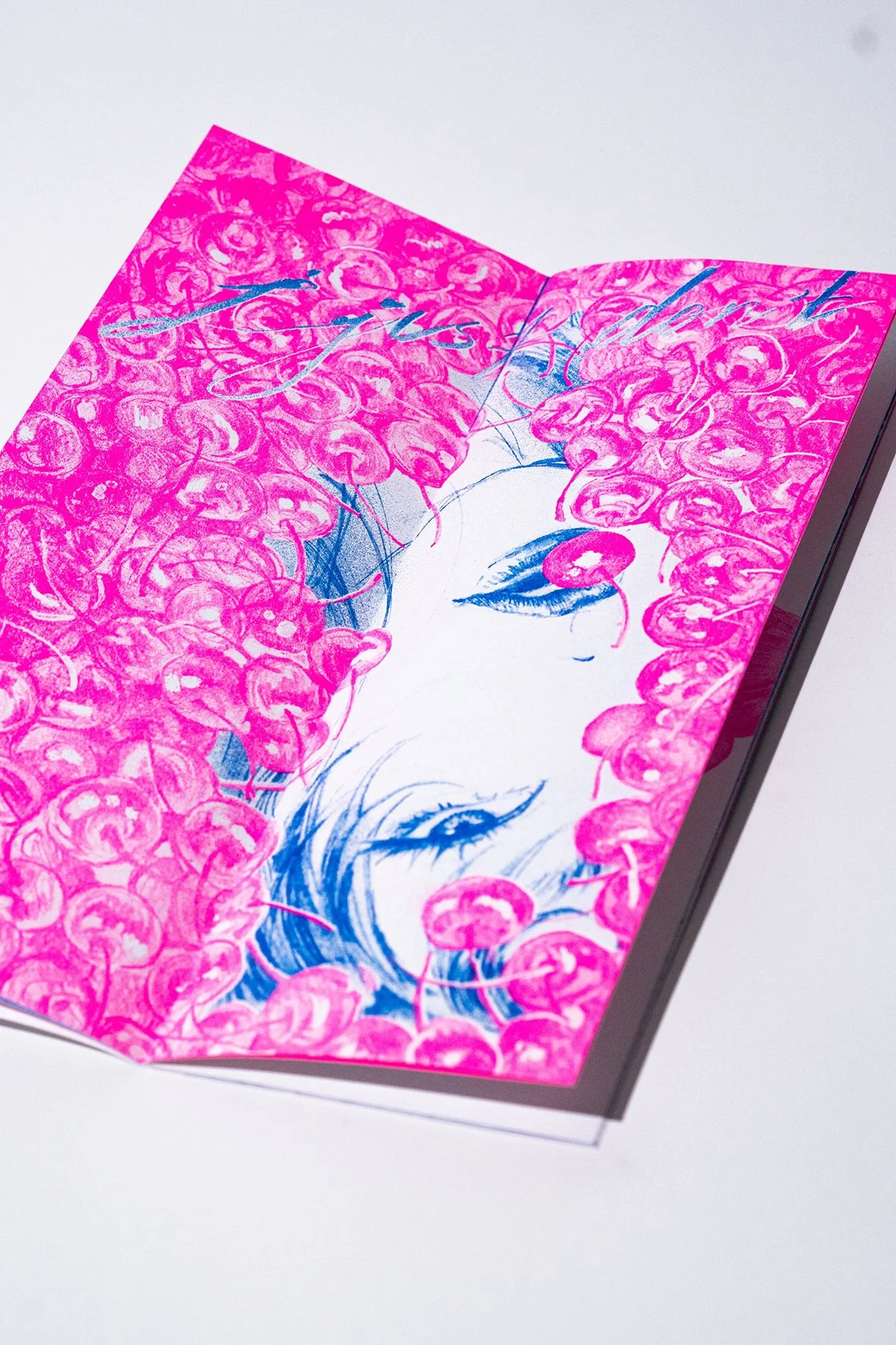
I usually start from an interest in visuals and then build from there. Cherry Maraschino: Zaii Side A & B was published at the same time because of my interest in folding formats and cassette concepts; the illustrations came after the folding. I still work this way.
You studied Communication Design at Chulalongkorn University. How did that experience inform your approach to making comics?
I learned printing and publication and design principles that helped make my compositions more interesting. However, the two classes that really helped my storytelling were Visual Media by Nicolas Verstappen and Moving Image by Note Abhichoke Chandrasen. These classes showed me the bigger picture — the importance of continuity from the first appearance to the ending, and how to develop signs and visuals that subtly communicate the message alongside the illustrations and literal script.
As both a writer and illustrator, do you have a preference for either? How are each different in practice and in personal fulfillment?
I prefer visuals over words. I struggle with forming words and sentences, so expressing emotions or making a statement through visuals has always been more my way. I always try to make the audience stop and think about what is happening, even with something as simple as a portrait that invites observation.
How do you see publications, comics in particular, evolving in terms of how they’re packaged for audiences going into the future? There has already been a shift from print to digital… As a consumer, are you someone who enjoys more the tactile feeling of holding a book or the relative convenience of digital copies and online distribution? Your books, as physical products, have incredibly creative presentations, so it is obvious that you care a lot about product design.
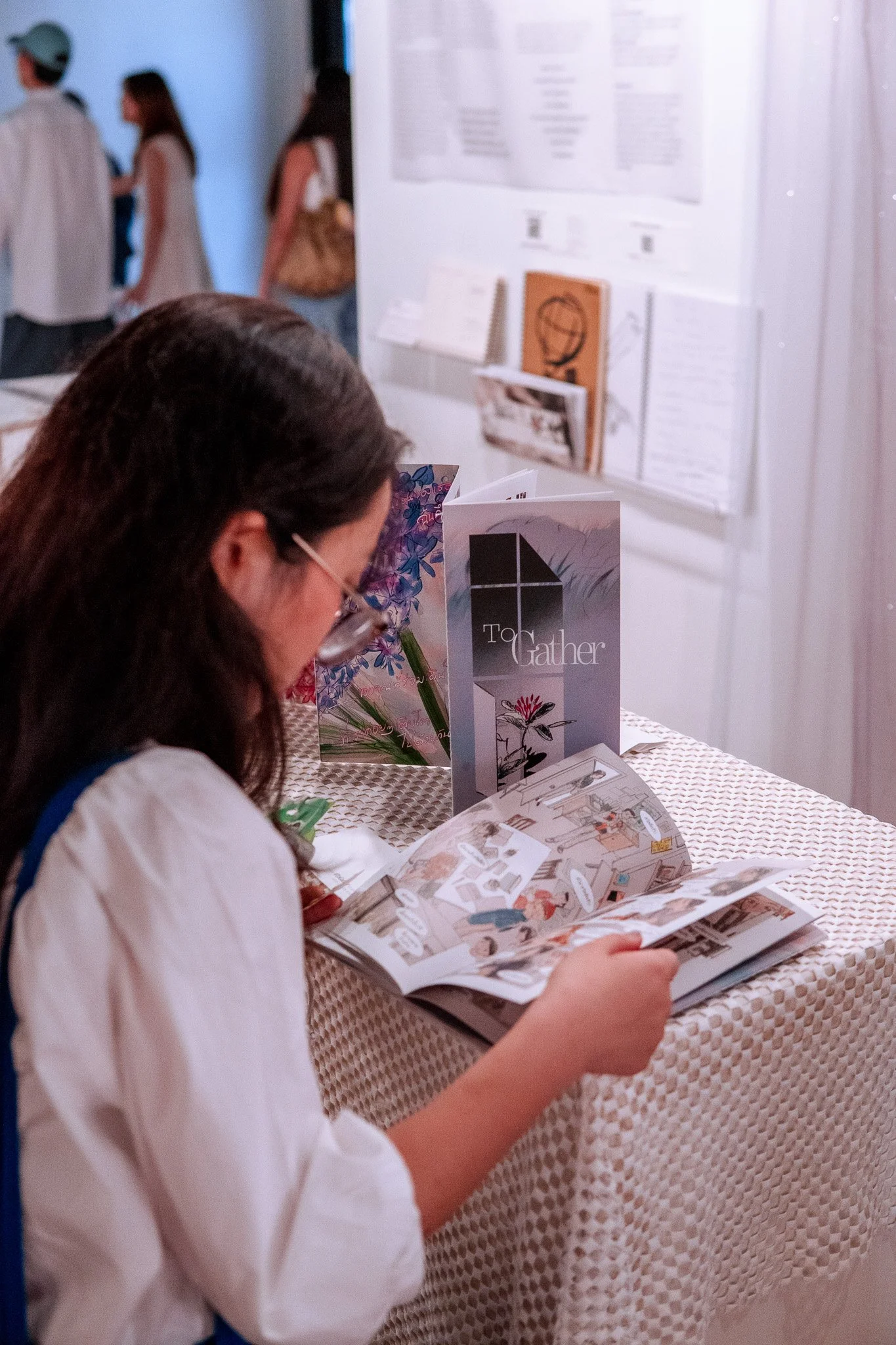
When I want something memorable for my audience, I often add small details, like tiny cut-out pages from ToGather, ribbons, or repeated elements. However, these choices come with higher production costs. Recently, I’ve been talking with friends about how books—comics and books in general—are becoming more collectible and more expensive. Fewer copies can be printed and sold because of these costs.
This is one of the reasons that leads to digital copies and creative presentations that enhance the reading experience. These approaches are not limited to physical books. I have seen several digital comics and webtoons that make good use of digital media. I remember reading Ava’s Demon and Homestuck; they included elements like Flash games or animations that complemented both the story and the visuals.
That kind of work often costs more than necessary, both as a consumer and as a creator. I hope we can find a way to make comics more accessible.
How does one thrive as a comics creator in current times, and what has been your own personal experience, the struggles and the benefits, of being an artist in Thailand?
I have seen more artists develop skills in production, such as sharing printing houses or finding places to produce their art as prints or merchandise. However, without proper support, this often stays at a hobby level. Sustaining it as a full-time practice is still a dimly lit path, as there is little consistency in income and distribution.
The small first step I tried to say in my senior project, ToGather, is that we need to build community and encourage each other to keep creating. With more diversity in comics and by reaching wider audiences, it may eventually lead to recognition of our talented community.
Being a creator these days involves navigating the social media landscape and with that comes dealing with both the communal and toxic aspects of that space. Do you have any advice for aspiring artists who also want to find work in comics?
Recently, I try to leave likes or comments for my friends and other artists whenever I can.
I hope every artist out there reminds themselves that they are talented, and that simply starting a piece — and even finishing it enough to post — is already a great achievement. What gets posted is affected by many factors beyond your control, and it is not a measure of your talent. Even on days when you don’t finish anything, just picking up your pencil or opening a canvas is already enough
Special thanks to Porszaaaa for making this interview possible, and keep an eye out for future collaborations with our featured artists!
